Renewable energy innovations are new technologies and methods that make clean power cheaper to produce, easier to store, and more reliable to deliver. Think of renewable power as a three-part system: generation (turning sunlight, wind, water, or heat from the earth into electricity), storage (holding that energy until it’s needed), and distribution (moving it to the businesses and homes that use it). Progress is happening in all three parts at once.
For business owners, that matters because the cost and reliability questions that once slowed adoption are being worked on from several directions at the same time. In Canada, public money is following the technology. Budget 2023 commits $83 billion in expected tax credit costs for clean energy and electricity through the 2034-35 fiscal year, including the Clean Electricity Investment Tax Credit and the Clean Technology Manufacturing Investment Tax Credit. Natural Resources Canada is also backing pilot work to reduce barriers for emerging renewable technologies and grow the country’s renewable electrical capacity.
This article explains how these systems work, the main types of technology, and where they’re being put to practical use, so you can make informed decisions with confidence.
What Renewable Energy Innovations Mean for Your Business
A standard solar panel is a mature technology. It has been around for decades, and most businesses already know what it does: it turns sunlight into electricity. An innovation, in this space, is usually what makes that electricity more useful, such as a smarter way to store it, manage it, or deliver it to the equipment that needs it.
That distinction matters if you’re weighing a move toward sustainable practices. Generating clean power is only part of the picture. Reliability, flexibility, and cost control depend on the whole system around the panels or turbines, and that’s where much of today’s progress is happening.
Here are a few terms worth knowing before we go deeper:
- Renewable energy
- Power drawn from sources that naturally replenish, such as sunlight and wind.
- Energy storage
- Equipment that holds surplus electricity so it can be used when generation slows down.
- Off-grid power system
- A self-contained setup that supplies electricity without relying on the main utility grid.
- Emerging renewable technology
- A newer approach still moving from demonstration toward wider commercial use.
Seen this way, innovation isn’t about chasing novelty. It’s about closing practical gaps, like keeping a remote site powered at night or reducing dependence on a single energy source. For decision-makers, that makes sustainability a question of operational fit as much as environmental benefit, and it’s an encouraging place to start planning.
How Renewable Energy Systems Work
From Wind and Sunlight to Usable Power
Wind turbines and solar panels start from different physics, but both end in the same place: electricity your business can use.
A wind turbine works like a fan in reverse. Moving air pushes against the blades and spins a rotor, which turns a generator. Inside, that rotation produces an electrical current. If you want the finer mechanics of how wind turns into electricity, the U.S. Department of Energy walks through each component.
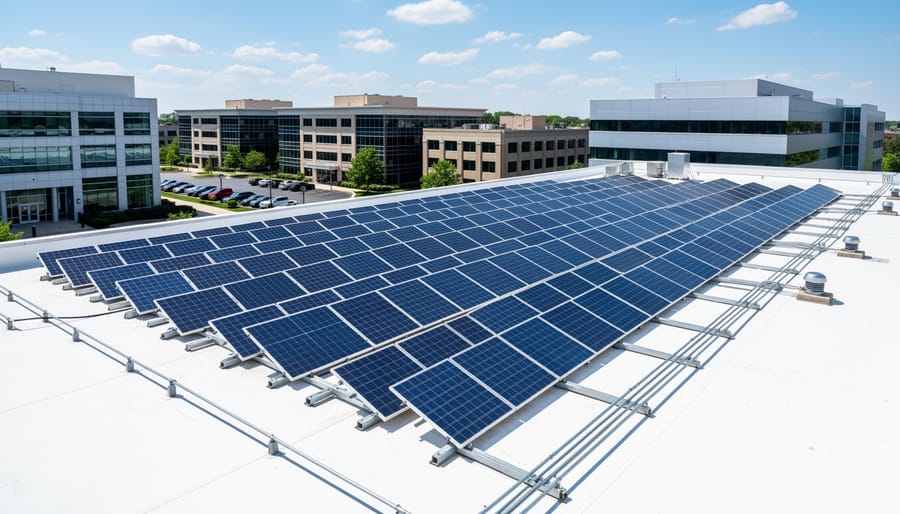
Solar panels skip the moving parts entirely. They’re made of photovoltaic cells, usually silicon, that react when sunlight hits them. Light knocks electrons loose, and those freed electrons flow as a direct current (DC).
Here’s the catch. Most equipment and buildings run on alternating current (AC), the type delivered by the grid. That’s where the inverter comes in. It’s a device that converts the DC from solar panels into AC, and in many wind setups it also conditions the output so it matches what your equipment expects. Think of it as a translator between the power source and everything plugged into it.
Without that conversion step, the power generated would be hard to use safely. With it, clean electricity can run lighting, machinery, and office systems.
Storing and Delivering Power Where It Is Needed
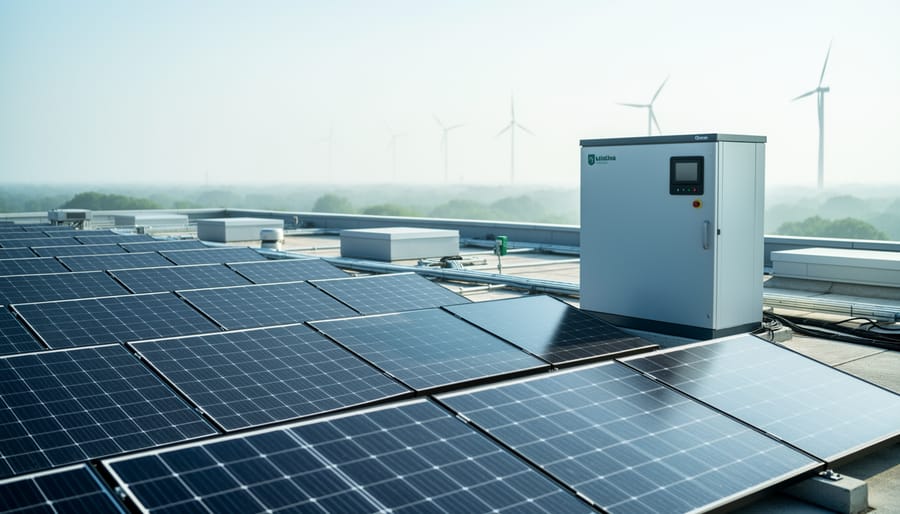
Wind and sunlight don’t follow a business’s schedule. Turbines sit idle on calm days, and solar panels go quiet after sunset. Energy storage closes that gap by holding surplus power when generation is high and releasing it when generation drops. Think of it as a reserve tank: the system fills up during good conditions and draws down when you need it.
Storage is only half the picture, though. Once power is available, it has to reach the right equipment safely. Power distribution equipment, such as switchgear, transformers, and protective devices, routes electricity to where it’s used, controls voltage levels, and shuts off flow quickly if a fault occurs. Without it, even a well-designed generation and storage setup can’t serve a building or worksite reliably.
This matters most for remote sites and operations that can’t afford interruptions. A site far from established infrastructure may have no practical backup, so the combination of generation, storage, and distribution becomes its dependable supply. Sites that do tie into the wider network face a different question, since a well-planned grid connection determines how surplus power is shared and how backup is handled. In both cases, the goal is the same: steady, safe power available when the work needs it, not just when the weather cooperates.
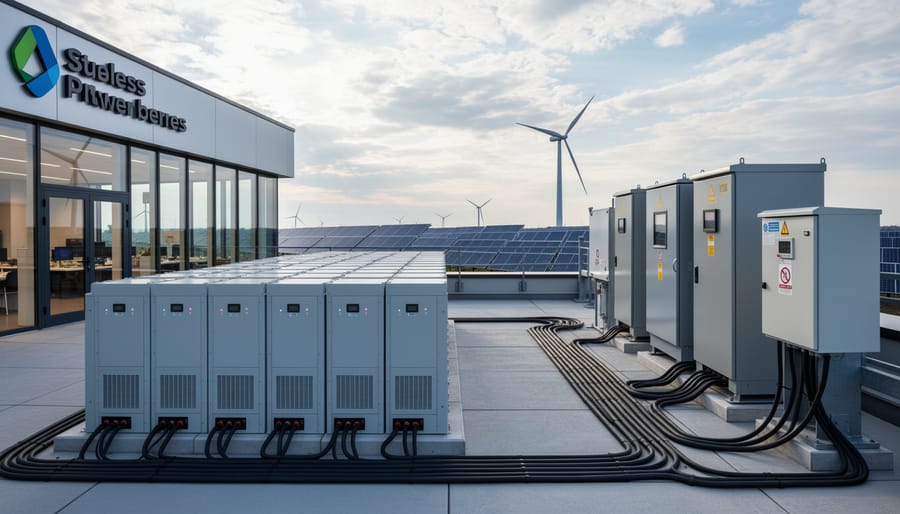
Types of Renewable Energy Products and Innovations
Wind and Solar Generation
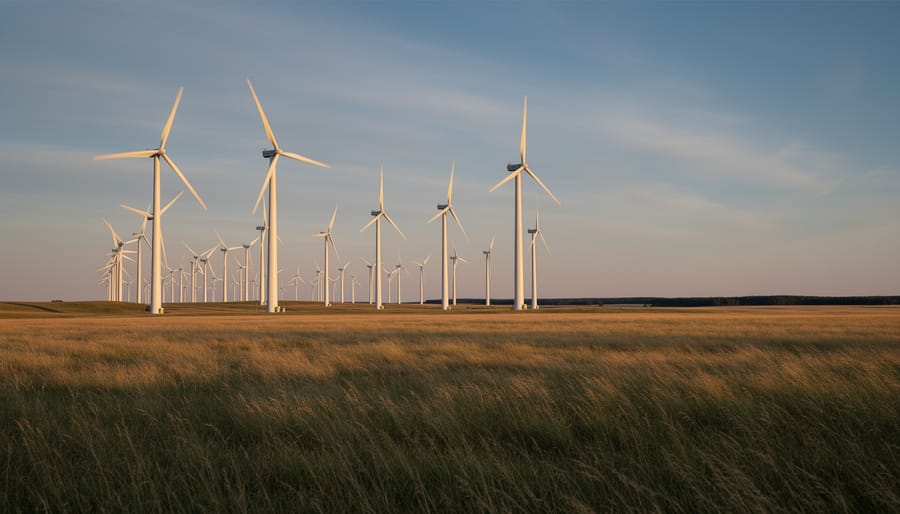
Wind and solar are the workhorses of renewable generation, and they pair well because they peak at different times. Solar panels produce the most power on bright, long summer days, while wind often picks up in cooler months and overnight, when the sun is gone. Used together, one tends to cover for the other, which smooths out the gaps a single source would leave.
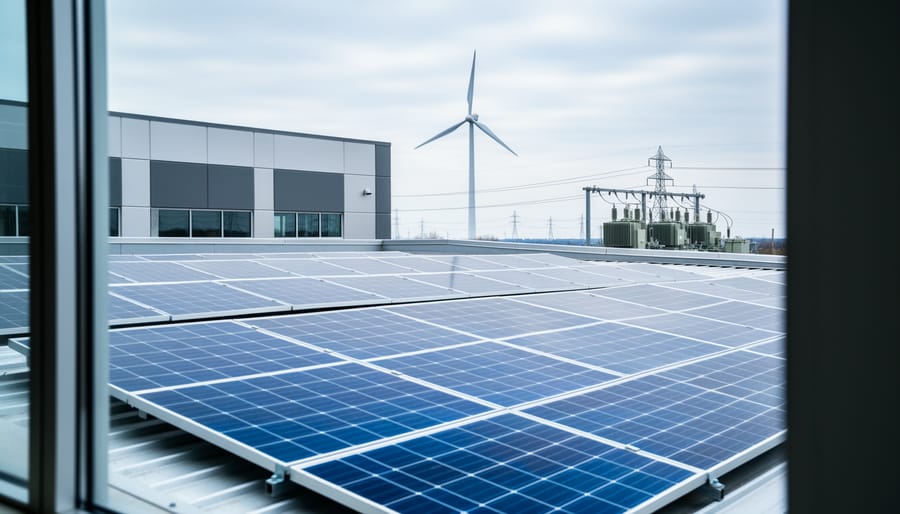
For a business, that balance means steadier output and less reliance on any one source. A site with both can keep equipment running through a calm evening or a cloudy week. Planning a project like this also involves electric interconnection, which is how your generation links safely to the wider power network.
Off-Grid Power Systems and Energy Storage
An off-grid power system supplies electricity without relying on the main utility grid. It generates its own power, usually from solar panels, wind turbines, or both, and sends it straight to the equipment that needs it. That independence suits remote facilities, field operations, and any site where a grid connection is impractical or unreliable.
Generation alone isn’t enough, though, because the sun sets and the wind drops. That’s where energy storage comes in. Storage simply means holding surplus electricity, most often in batteries, so it can be used later. Paired together, generation and storage keep power available around the clock, not only when conditions are ideal. For a business, that pairing is what turns variable natural resources into dependable, everyday power.
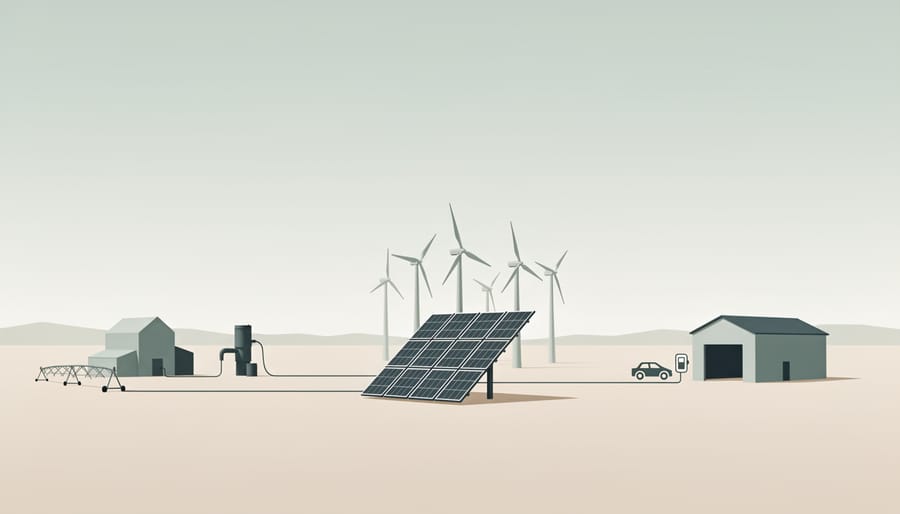
Emerging Technologies and Clean Hydrogen
“Emerging” simply means a technology is still moving from demonstration toward wider commercial use. It works in practice, but it hasn’t yet reached the scale or track record of standard solar and wind. Clean hydrogen is one example: hydrogen produced with low or no emissions, which can be stored and used as a fuel or feedstock. Federal policy is paying attention to it, with a Clean Hydrogen Investment Tax Credit introduced in the 2022 Fall Economic Statement.
Pilot projects help close the gap. Natural Resources Canada funds a project with Deep Earth Energy Production Corp, a for-profit organization, aimed at reducing barriers to emerging renewable energy deployment and increasing Canada’s renewable electrical capacity from emerging technologies. Projects like this show how new ideas move toward practical use.
How Businesses Use Renewable Energy Innovations
Businesses rarely adopt renewable energy for a single reason. The strongest projects solve a practical problem first, then deliver sustainability benefits on top. Whether a company runs a processing plant, a field operation, or a regional office, the same innovations tend to show up in a handful of familiar roles.
- Remote site power: self-contained wind, solar, and storage systems can supply electricity where extending the main grid is impractical or costly.
- Backup and resilience: stored energy helps keep critical equipment running through outages and supply disruptions.
- Reduced reliance on one source: blending several energy inputs lowers exposure to fuel delivery problems and price swings.
- Sustainability commitments: cleaner generation gives companies a measurable way to follow through on emissions goals.
Many organizations find that a modular approach makes this manageable. Instead of committing to one large installation, a business can start with the capacity it needs today and add generation or storage as operations grow. That flexibility also suits sites where conditions change, such as seasonal operations or expanding facilities.
Safety and collaboration matter just as much as the hardware. Well-run projects bring operators, engineers, and local stakeholders into the conversation early, so equipment is installed, maintained, and monitored with everyone’s needs in mind. Communities near these operations often benefit from the added reliability and from the skills and jobs that come with maintaining modern energy systems.
For companies focused on sustainability, the payoff can be both environmental and financial. Practical steps to cut your carbon often go hand in hand with managing power costs more predictably, which is why decision-makers increasingly treat energy innovation as part of long-term planning rather than a standalone project.
Canada’s Policy and Pilot Project Landscape
Federal policy is giving businesses a clearer signal about where Canada’s clean energy investment is headed. A few verified details help frame the picture, though anyone planning around them should check current program terms directly with official sources.
Budget 2023 states that the government will spend $83 billion, the expected cost of tax credits for clean energy and electricity, through the 2034-35 fiscal year. That figure describes the scale of the commitment over time, not what any single business can claim.
Among the major new programs are the Clean Electricity Investment Tax Credit and the Clean Technology Manufacturing Investment Tax Credit. A Clean Hydrogen Investment Tax Credit was introduced earlier, in the 2022 Fall Economic Statement. Details such as eligibility and rates are set out by the programs themselves, so they are best confirmed at the source rather than assumed.
Pilot funding is another part of the landscape. Natural Resources Canada funds a project aimed at reducing barriers to emerging renewable energy deployment and increasing Canada’s renewable electrical energy capacity from emerging renewable energy technologies. According to the Natural Resources Canada grant record, the recipient is Deep Earth Energy Production Corp, a for-profit organization.
Key details of the agreement:
– Funder: Natural Resources Canada
– Recipient: Deep Earth Energy Production Corp (for-profit)
– Agreement value: $27,552,500.00
– Agreement term: Oct 22, 2018 to Dec 31, 2028
Taken together, these facts show both broad tax-based support and targeted pilot funding for emerging technologies. Programs change over time, so confirm current details with official government sources before making decisions.
Common Questions About Renewable Energy Innovations in Canada
What are Canada’s major renewable energy innovations?
Canada’s innovation story spans generation, storage, and delivery, from wind and solar to energy storage, off-grid power systems, and clean hydrogen. Federal support is also part of the picture: the Clean Electricity Investment Tax Credit and the Clean Technology Manufacturing Investment Tax Credit are among the major new programs.
What renewable energy products and technologies are being deployed in Canada?
Businesses can look to wind and solar generation, energy storage, and power distribution equipment. A Clean Hydrogen Investment Tax Credit, introduced in the 2022 Fall Economic Statement, also signals growing interest in hydrogen. Which products suit a given site depends on its power needs and location.
Are there pilot renewable energy projects in Canada?
Yes. Natural Resources Canada funds a project with Deep Earth Energy Production Corp, a for-profit organization, aimed at reducing barriers to emerging renewable energy deployment. The goal is to increase Canada’s renewable electrical capacity from emerging technologies.
What is the deployment status of renewable energy projects in Canada?
Deployment is ongoing and supported by long-term public commitments. Budget 2023 sets aside $83 billion in expected clean energy and electricity tax credit costs through the 2034-35 fiscal year, while the pilot agreement noted above runs from Oct 22, 2018 to Dec 31, 2028 with a value of $27,552,500.00.
Because programs and project details change, it is worth confirming current specifics with official sources before making a business decision.
Renewable energy innovations cover far more than the panels and turbines most people picture. They span generation, storage, and distribution, and each link in that chain affects how dependable, affordable, and sustainable a business’s power can be. Once you understand how the pieces fit together, planning a practical transition becomes much more manageable.
The picture in Canada keeps moving in a promising direction. Federal tax credits for clean electricity, clean technology manufacturing, and clean hydrogen show a sustained commitment, and funded pilot work on emerging technologies is helping lower the barriers to wider adoption. It is worth confirming current program details with official sources as you plan.
Every operation has its own needs, so the right mix will look different from one business to the next. A good next step is to explore the solutions that suit your sites and goals, and to keep an eye on where this industry is heading next.