Canadian wind power is growing steadily, with projections pointing to a larger and more reliable role in the national energy mix. Canada installed 1.4 GW of new wind capacity in 2024, and total wind capacity is projected to climb from 18.7 GW in 2025 to 23.5 GW by 2029. Put simply, a gigawatt (GW) is a billion watts, enough to represent serious, utility-scale generation. The momentum reaches beyond wind alone. Canada’s combined wind, solar and storage capacity has grown 56% since 2020, including more than 5 GW of new wind, and is expected to rise another 32% by 2029. Engineering work is moving too: Manitoba Hydro awarded contract 043662 to ILF Consulting Engineers, a 48-month engagement running from August 2026 to July 2030. For business owners weighing a shift to renewable energy, these numbers signal a maturing market built on innovation and long-term sustainability. This update covers what has changed, the key developments behind the growth, why they matter for your planning, and what to watch next.
What Changed: Canadian Wind Energy Projects and Developments at a Glance
Canadian wind power is easier to follow once two terms are clear. A gigawatt (GW) is one billion watts, enough electricity to supply a very large number of homes at once. Installed capacity is the maximum output that wind turbines are built to deliver when conditions are ideal. It measures what the fleet can produce, not what it actually generates in a given year.
Against that backdrop, the headline numbers are encouraging. Canada installed 1.4 GW of wind in 2024, and total capacity is projected to climb from 18.7 GW in 2025 to 23.5 GW by 2029.
Reading the Numbers: Growth Since 2020 and Projected Growth to 2029
The 56% growth figure can be misread, so it helps to be precise about what it covers. Since 2020, Canada’s total installed capacity across wind, solar and storage has grown 56%. That is a combined category, not a wind-only number. Within that total, more than 5 GW came from new wind, which shows wind is a meaningful driver of the increase, but the percentage itself does not belong to wind alone.
The forward-looking number follows the same logic. The combined category is expected to grow another 32% by 2029. Again, that describes wind, solar and storage together.
For a business owner, this distinction matters when comparing figures. If you see a wind-specific projection, such as the rise from 18.7 GW in 2025 to 23.5 GW by 2029, treat it as a separate measure from the combined growth rates. Keeping the two apart avoids overstating what wind has delivered on its own, while still showing a clear, encouraging trend across clean power overall.
Key Developments Shaping Canada’s Wind Sector
1. 1.4 GW of Wind Capacity Installed in 2024
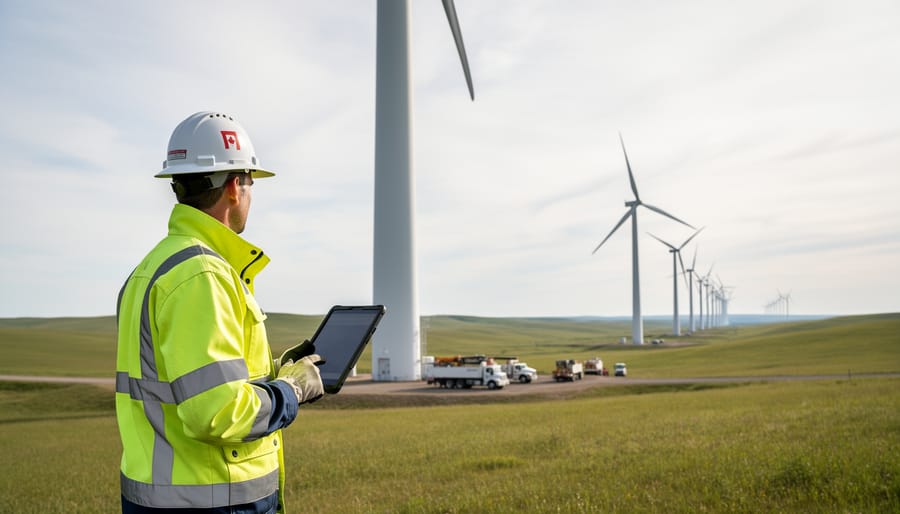
In 2024, Canada installed 1.4 GW of new wind capacity. In practical terms, that is enough new generating ability to be meaningful at a national scale, and it was added in a single year rather than spread across a decade.
Build-out at this pace tells us something useful about momentum. Wind farms take years to plan, permit, engineer and construct, so a year with 1.4 GW of installations reflects decisions made well in advance. It suggests developers, utilities and investors are still committing to projects and seeing them through to completion, rather than treating wind as a one-off experiment.
It also helps explain why the longer-term outlook looks so encouraging. Capacity is projected to climb from 18.7 GW in 2025 to 23.5 GW by 2029, and steady annual additions like the 2024 figure are what make a trajectory like that believable. Each year of construction also deepens the pool of experienced engineers, contractors and suppliers working in the sector.
For business owners considering renewable energy, the takeaway is straightforward: wind is not a niche or speculative option in Canada. It is an active, growing part of the energy mix, and the expertise built through projects at this scale tends to filter down into smaller, practical solutions over time.
2. More Than 5 GW of New Wind Added Since 2020
Since 2020, Canada’s combined wind, solar and storage capacity has grown 56%, and more than 5 GW of that growth came from new wind. That makes wind the single biggest contributor to the build-out, and it explains why Canadian wind projects keep drawing attention from utilities, investors and businesses alike.
The pairing matters because each source covers the others’ gaps. Wind doesn’t blow on a schedule, and solar only produces while the sun is up. Storage, usually large batteries, holds surplus power from windy or sunny periods and releases it when production dips. Put together, the three can deliver steadier, more dependable electricity than any one of them could alone.
For a business owner, that combination is more than a grid-level story. It’s the same logic behind off-grid and on-site systems: generate from more than one source, store what you don’t use right away, and draw it down when you need it. As the mix of wind, solar and storage across Canada matures, the technology and know-how behind it become easier to apply at a smaller scale, too.
3. Manitoba Hydro Awards Contract 043662 to ILF Consulting Engineers
Manitoba Hydro has awarded Contract 043662 to ILF Consulting Engineers, a development that adds a concrete engineering milestone to the broader growth story in Canadian wind power and energy infrastructure. The public Contract 043662 details confirm the essentials, and they are worth stating plainly:
- Contract number: 043662.
- Awarding utility: Manitoba Hydro.
- Awarded firm: ILF Consulting Engineers.
- Term: 48 months.
- Start date: August 1, 2026.
- End date: July 31, 2030.
That is the full verified picture. The notice, as summarized here, doesn’t tell us the scope of work, the project location, or the contract’s value, so it would be a mistake to guess at any of them. Whether this work touches wind generation specifically isn’t something we can claim.
What we can do is put the timeline in context. A four-year engineering and consulting term might look long at first glance, but it’s quite ordinary for large energy infrastructure. Major utility projects move through design, regulatory review, procurement, construction support, and commissioning, and each stage needs technical oversight. Engineering firms are typically retained across that whole arc rather than for a single deliverable, which keeps design decisions consistent and helps catch problems early.
For business owners watching the sector, the takeaway is simple. Long-term contracts like this one reflect the steady, planned pace at which utilities build capacity, and that same discipline underpins the growth in wind and other renewables across the country.
4. A Pipeline Pointing Toward 23.5 GW by 2029
The forward-looking story in Canadian wind power is a simple one: capacity is expected to climb from 18.7 GW in 2025 to 23.5 GW by 2029. That’s an addition of roughly 4.8 GW over four years, which would extend the steady build-out the sector has already shown, including the 1.4 GW installed in 2024.
Think of this as a pipeline, meaning the set of projects that are planned, being engineered, or under construction and expected to reach operation over the coming years. Each new wind farm moves through stages, from early planning and engineering through construction and commissioning, so the 2029 figure reflects work that’s already in motion or in the planning stages today.
A projection is still an estimate, though. Project timelines can slip or accelerate, and market conditions, supply chains, and financing can all change what actually gets built and when. Treat 23.5 GW as a well-grounded direction of travel rather than a guaranteed result.
For business owners, the takeaway is practical. The trend line points steadily upward, and the specific numbers will keep being refined as projects advance. Checking updated capacity figures from official sources over time is a sensible habit when you’re planning your own renewable energy path.
Why It Matters for Businesses Planning a Move to Renewable Energy
When a national wind sector adds 1.4 GW in a single year, as Canada did in 2024, it does more than lift grid numbers. It builds the knowledge, suppliers and engineering talent that every later project draws on. For business owners weighing a move to renewable energy, that maturing ecosystem lowers the learning curve. Equipment is easier to source, experienced engineers are easier to find, and long-term infrastructure work, like Manitoba Hydro’s 48-month engineering contract running to 2030, shows how seriously large energy projects are being planned.
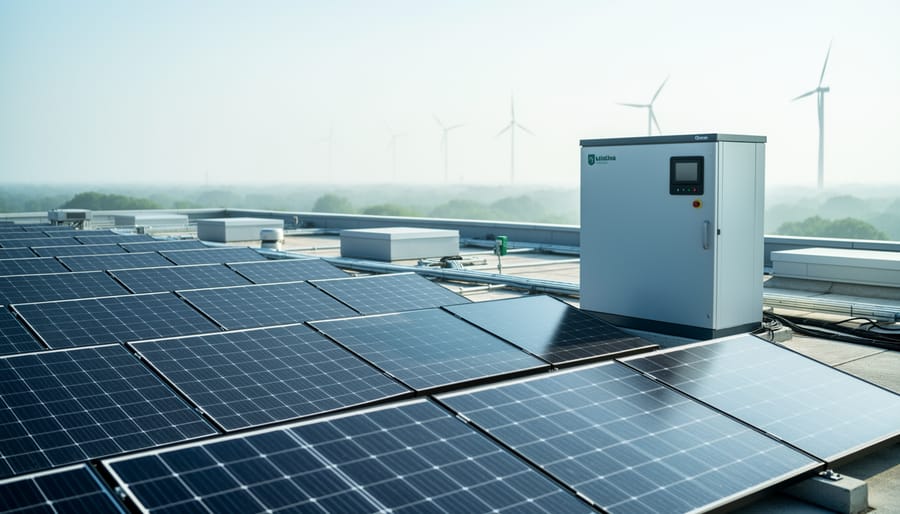
The growth also strengthens the case for pairing technologies on your own site. Canada’s combined wind, solar and storage capacity has grown 56% since 2020, with more than 5 GW of that from new wind. Wind often blows hardest when sunshine is weakest, so combining the two with battery storage can smooth out supply for remote operations, farms, work camps and facilities beyond the reach of the grid. That is where off-grid power, energy storage and power distribution expertise come together, turning a patchwork of sources into steady, usable electricity.
Planning ahead pays off. Understanding electric interconnection early helps you decide whether a grid-tied or standalone system fits your operation. And because cleaner power can also trim operating costs, it is worth exploring how businesses cut your carbon footprint and their electricity spending at the same time. The sector’s momentum is a signal that renewable options are becoming more accessible, practical and innovative for organizations of every size.
What to Watch Next in Canadian Wind Power
Watching a few clear signals will tell you whether Canadian wind power stays on track. The biggest is progress toward the 2029 projection, which has capacity climbing from 18.7 GW in 2025 to 23.5 GW. Annual installation totals, like the 1.4 GW added in 2024, show whether that pace holds.
Next, follow the 2026 to 2030 delivery window of Manitoba Hydro’s Contract 043662, which runs 48 months from August 1, 2026. Long engineering contracts like this are an early sign of how large energy projects advance.
Also keep an eye on combined wind, solar and storage growth, expected to rise 32% by 2029. For your own planning, learn how grid connection works, since interconnection rules shape the timing of many projects.
Revisit those sources periodically, and treat projections as guides that can shift with project timelines.
Frequently Asked Questions About Canadian Wind Energy Projects
How much wind capacity did Canada install in 2024?
Canada installed 1.4 GW of wind capacity in 2024.
How much wind capacity is projected by 2029?
Capacity is projected to rise from 18.7 GW in 2025 to 23.5 GW by 2029.
What does Manitoba Hydro’s Contract 043662 involve?
Manitoba Hydro awarded it to ILF Consulting Engineers for 48 months, running August 1, 2026 to July 31, 2030. Details on scope and value haven’t been confirmed, so check Manitoba Hydro’s official announcements.
What does installed capacity mean?
It’s the maximum power a facility can produce when running at full output, not the energy actually generated over time.
Generation statistics and policy updates remain unconfirmed here, so official government and utility sources are the best place to track them.
Canadian wind energy projects and developments are moving in a clear direction. With 1.4 GW installed in 2024 and capacity projected to reach 23.5 GW by 2029, the momentum is real. Start exploring your renewable options at whatever pace suits your operations.