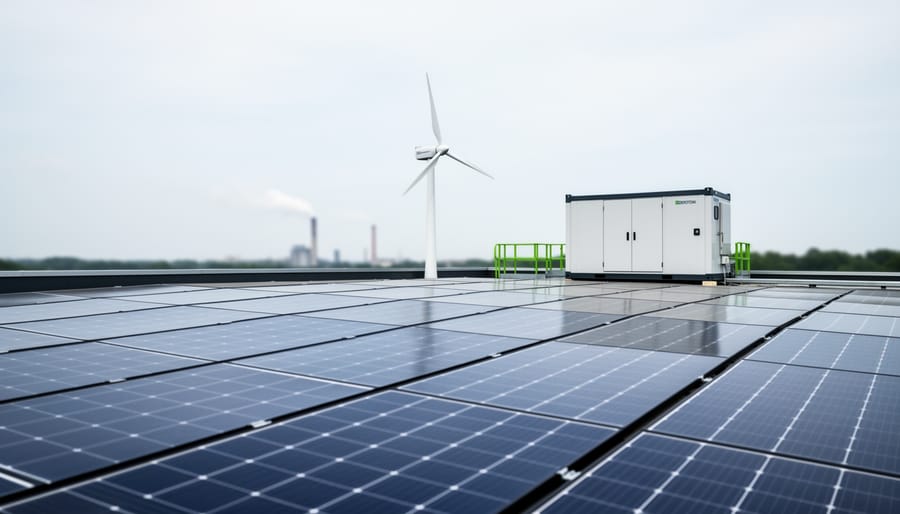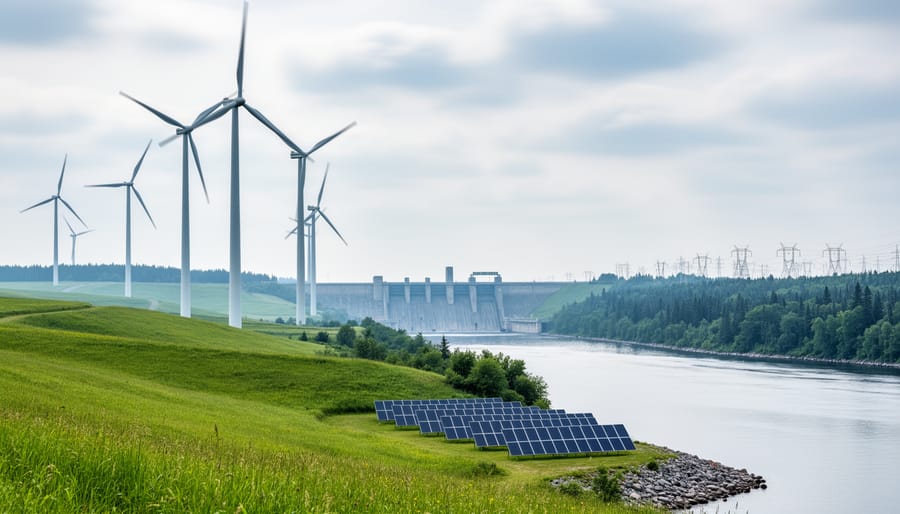
Canada’s independent power producers represent a growing ecosystem of private energy companies, municipalities, and Indigenous Nations that develop and operate renewable generation projects under long-term electricity purchase agreements with provincial utilities. As of 2026, business leaders exploring green energy procurement or partnership opportunities can draw from a concrete roster of active IPPs spanning multiple provinces, each bringing distinct capabilities in wind, hydro, biomass, and solar generation.
Independent power producers differ from traditional utilities by operating as competitive, project-focused entities rather than monopoly grid owners. They secure contracts through competitive procurement processes like BC Hydro’s recent Call for Power, which aims to add approximately 3,000 gigawatt-hours annually of clean energy to meet growing provincial demand. These electricity purchase agreements formalize output volumes, pricing structures, and operational terms, typically over decades.
The business case for understanding this landscape extends beyond simple energy sourcing. IPPs offer renewable energy credits, project co-development opportunities, and direct power purchase agreements that can stabilize costs and meet corporate sustainability targets. BC Hydro alone maintains active supply lists covering both operating projects and facilities in development, providing transparency into the pipeline of new capacity.
Decision-makers considering partnerships or procurement from independent producers benefit from clarity on qualification criteria, operational scale, and contractual frameworks. The producers detailed in this list reflect verified membership in national industry associations, active electricity purchase agreements with provincial utilities, and documented operational capacity, ensuring you’re working from current, actionable intelligence for renewable energy strategy in 2026.
What Defines an Independent Power Producer in Canada
An independent power producer in Canada is an entity that develops and operates electricity generation projects using renewable resources, but operates outside the traditional provincial utility structure. IPPs encompass power production companies, municipalities, and Indigenous Nations, all working to add clean energy capacity to the grid.
What sets IPPs apart from traditional utilities is ownership and operational scope. Provincial utilities like BC Hydro own and manage the bulk of generation infrastructure and transmission networks, serving customers directly. IPPs, by contrast, focus on developing specific generation projects and selling the electricity they produce to utilities rather than to end consumers.
The resources IPPs use include wind, water, and biomass. These renewable sources align with Canada’s climate commitments and provincial energy strategies. A wind energy project developed by an IPP might generate enough electricity to power 650 homes, contributing meaningful capacity without requiring the utility to build and own the facility itself.
The relationship between IPPs and utilities is formalized through electricity purchase agreements. EPAs are typically long-term contracts that lock in the amount of electricity the IPP will supply, the pricing structure, and all operational terms. BC Hydro, for example, has used EPAs for years to purchase power from independent producers, supporting the province’s energy needs as demand changes and grows.
BC Hydro engaged with First Nations, independent power producers, and stakeholders starting in June 2023 to acquire approximately 3,000 gigawatt-hours per year of clean energy from new resources. In April 2024, the utility issued a competitive Call for Power to bring new projects online.
This framework allows provinces to expand generation capacity efficiently, leveraging private and community investment while maintaining grid stability and long-term supply security.
How This List Was Chosen
This list draws from three primary sources to ensure accuracy and relevance for businesses exploring renewable energy partnerships in Canada. First, we consulted the membership roster of Electricity Canada, a national industry association whose members include established operators like Brookfield Renewable, Capital Power, and BC Hydro. Second, we referenced provincial utility partnerships, particularly BC Hydro’s IPP supply lists dated April 1, 2026, which document both operational projects and those in development across British Columbia. Third, we incorporated federal energy project documentation that identifies independent power producers contributing to Canada’s electricity grid.
The selection criteria prioritize entities actively developing or operating renewable energy projects in 2026. This includes large-scale power production companies with national reach, municipal governments running local energy initiatives, and Indigenous Nations leveraging wind, water, and biomass resources. Some producers on the list operate established facilities under long-term electricity purchase agreements, while others represent emerging capacity currently in development stages.
The focus remains on entities making tangible contributions to Canada’s renewable energy capacity rather than aspirational players or those without verifiable operational status. BC Hydro’s qualification framework helped define what constitutes an IPP, including power production companies, municipalities, and Indigenous Nations that develop projects using renewable resources and typically supply electricity through contractual agreements with provincial utilities.
Independent Power Producers Active in Canada
1. Brookfield Renewable, Diversified Clean Energy Leadership
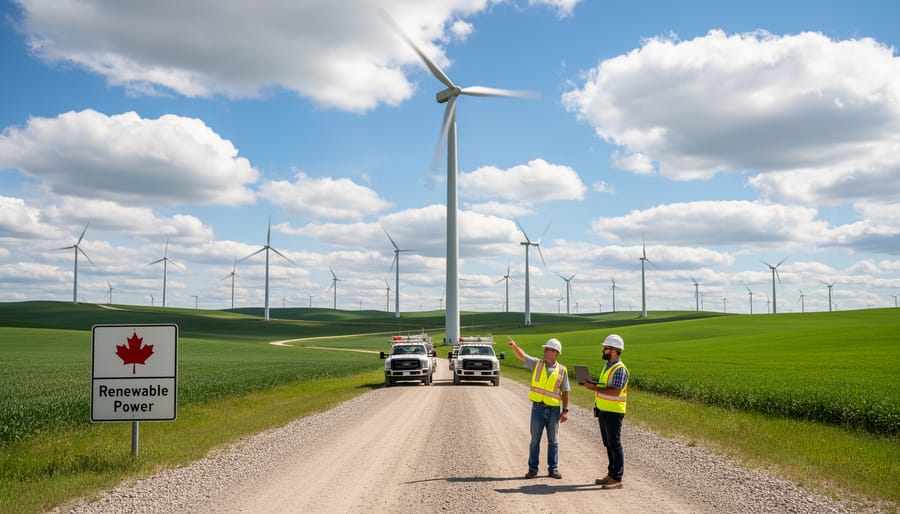
Brookfield Renewable stands out as one of Canada’s most established independent power producers, with a portfolio that spans multiple renewable technologies and regions. As a member of Electricity Canada, the company demonstrates its active participation in shaping the country’s energy policy and industry standards. Brookfield operates a diversified clean energy platform that includes hydroelectric, wind, solar, and energy storage facilities across Canada, giving it the flexibility to serve different market needs and geographic areas. This breadth of resources positions Brookfield as a major contributor to Canada’s renewable energy capacity in 2026. For businesses exploring renewable energy partnerships, Brookfield’s scale and operational track record make it a significant player to understand when evaluating potential suppliers or investment opportunities in the Canadian clean energy sector.
2. Capital Power, Integrated Power Generation
Capital Power holds a significant position in Canada’s integrated power generation landscape, combining conventional and renewable energy assets across multiple provinces. As a member of Electricity Canada, the company operates within the country’s established energy framework while contributing to both baseload and clean power supply. Its portfolio spans natural gas, wind, and solar facilities, giving it the flexibility to meet diverse grid requirements and support regional energy security. For businesses evaluating potential energy partners, Capital Power represents a scaled operator with the infrastructure and market presence to deliver reliable, long-term power solutions. The company’s participation in Canada’s evolving energy mix positions it as a key player for organizations seeking integrated generation capacity backed by proven operational experience.
3. Alectra Inc., Municipal and Regional Power Distribution
Alectra Inc. stands out for its focus on municipal and regional power distribution across Ontario. Unlike IPPs that primarily generate electricity from new renewable projects, Alectra operates as a distribution utility serving over one million customers in communities including Mississauga, Brampton, Markham, and Vaughan. The company’s membership in Electricity Canada reflects its significant role in the broader energy ecosystem, where it connects diverse power sources, including renewable energy from independent producers, to homes and businesses. For companies exploring renewable energy partnerships in Ontario’s Greater Toronto Area and surrounding regions, Alectra represents a key distribution partner that facilitates the flow of clean power to end users, making it an important player to understand even though its primary function differs from traditional generation-focused IPPs.
4. AltaLink, Transmission Infrastructure Specialist
AltaLink operates as a specialized member of Canada’s independent power producer landscape with a distinct focus on transmission infrastructure rather than generation alone. As a confirmed member of Electricity Canada, the company plays a critical role in connecting renewable energy projects to the grid and ensuring that power flows efficiently across regions. While many IPPs concentrate on developing wind, water, or biomass generation facilities, AltaLink’s expertise lies in building and maintaining the high-voltage transmission lines and substations that make large-scale renewable energy deployment possible. This infrastructure focus positions the company as an enabling partner for other producers bringing clean energy online, particularly in provinces where distributed generation needs robust transmission networks to reach end users and support grid reliability.
5. ATCO Ltd, Diversified Energy and Utilities
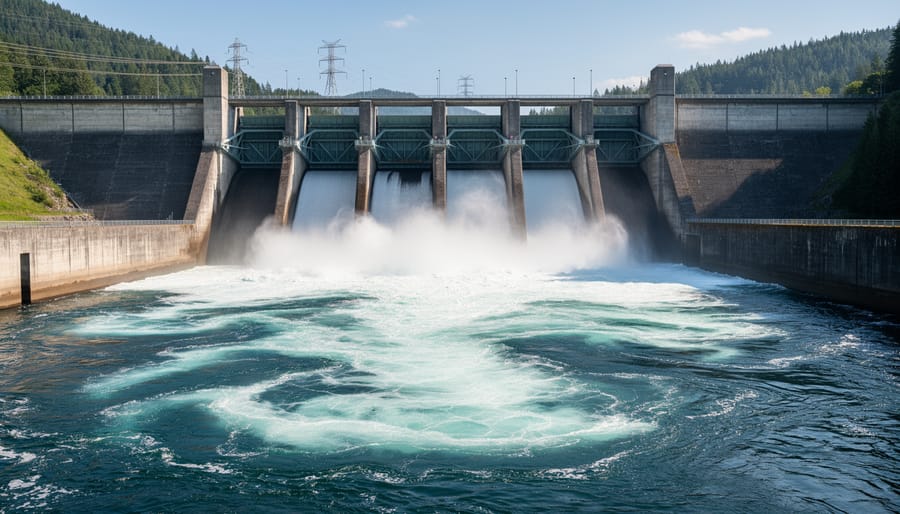
ATCO Ltd operates as a diversified energy and utilities company with a broad portfolio spanning electricity transmission, distribution, and natural gas infrastructure across Canada. As a member of Electricity Canada, ATCO participates in the national conversation around energy innovation and grid modernization, bringing decades of operational experience to the independent power sector.
The company’s structure allows it to engage in multiple aspects of the energy value chain, from generation projects to the infrastructure that delivers power to end users. This integrated approach positions ATCO to understand both the production and distribution challenges that businesses face when pursuing renewable energy solutions.
For business decision-makers exploring renewable energy partnerships, ATCO represents the type of established operator with the financial stability and technical capacity to support long-term energy agreements. Its membership in Electricity Canada signals active participation in industry standards and collaborative initiatives shaping Canada’s energy transition in 2026.
6. Canadian Utilities Ltd., Long-Standing Energy Operator
Canadian Utilities Ltd. stands as one of Canada’s most established energy operators, with a presence spanning decades across the country’s evolving power landscape. The company’s membership in Electricity Canada underscores its active role in shaping national energy policy and contributing to the industry dialogue around renewable integration and infrastructure development.
As part of the broader independent power producer ecosystem, Canadian Utilities brings operational experience and technical capacity that benefits both utility partnerships and long-term energy planning. Businesses exploring renewable energy options can view Canadian Utilities as a proven entity with deep roots in Canada’s energy infrastructure, offering the stability and track record that come from sustained involvement in the sector. The company’s continued engagement through industry associations signals its commitment to adapting alongside Canada’s clean energy transition, making it a relevant reference point for decision-makers evaluating the maturity and reliability of potential energy partners in 2026.
7. BC Hydro and Power Authority, Provincial Utility with IPP Partnerships
BC Hydro occupies a unique position in Canada’s independent power producer landscape. As British Columbia’s provincial utility, it operates its own generation facilities while simultaneously functioning as one of the country’s most active partners with IPPs. The utility purchases power from independent producers to support B.C.’s evolving energy needs, creating procurement opportunities that shape the province’s renewable energy development. In April 2024, BC Hydro issued a competitive Call for Power following an engagement process that began in June 2023 with First Nations, independent power producers, and stakeholders. This initiative aims to acquire approximately 3,000 gigawatt-hours per year of clean or renewable energy from new resources. BC Hydro’s dual role as both utility operator and IPP partner makes it a central player in facilitating renewable energy growth across the province, offering businesses a clear entry point into understanding how IPPs connect with established power systems.
8. Canadian Power Holdings, Growing Presence in the Market
Canadian Power Holdings is a recognized participant in Canada’s evolving power sector, with its membership in Electricity Canada placing it among the country’s active energy industry operators. As a member of this national association, Canadian Power Holdings contributes to the dialogue and development of Canada’s electricity landscape alongside established utilities, transmission operators, and renewable energy developers.
While specific operational details about Canadian Power Holdings’ current projects or generation capacity aren’t widely documented, its inclusion in Electricity Canada’s membership roster signals its engagement with the industry’s standards, policy discussions, and collaborative efforts to meet the country’s changing energy demands. For businesses exploring renewable energy partnerships, understanding the full spectrum of active players, including those building their presence, provides a more complete picture of the market and potential collaboration opportunities as Canada continues its clean energy transition.
9. Independent Wind Energy Projects, Community-Scale Generation
Community-scale wind projects represent an important segment of Canada’s independent power producer landscape, bringing renewable energy directly to smaller regions and local grids. Federal energy documentation highlights examples of IPP wind energy initiatives where turbines are expected to generate enough electricity to power up to 650 homes, demonstrating how these smaller producers deliver measurable impact at the community level. Unlike massive utility-scale wind farms, these projects often serve specific municipalities, rural areas, or Indigenous communities, aligning energy production with local consumption patterns and sustainability goals. They prove that not every renewable installation needs to be gigawatt-scale to matter. For businesses exploring partnerships or procurement options, understanding the role of community-scale wind producers within the broader roster of Canadian wind projects offers insight into distributed generation models and regional energy solutions that can complement larger utility agreements.
10. Indigenous Nations-Led IPPs, Sovereignty and Sustainable Development
Indigenous Nations are increasingly stepping into the independent power producer space, using renewable resources like wind, water, and biomass to build energy projects that serve dual purposes: achieving greater energy sovereignty and driving economic development in their communities. BC Hydro recognizes Indigenous Nations as qualifying IPPs, reflecting their growing role in Canada’s renewable energy landscape. These projects allow First Nations to control their own power supply, reduce reliance on external utilities, and generate revenue through electricity purchase agreements with provincial grids. Since June 2023, BC Hydro has actively engaged with First Nations alongside other IPPs to acquire approximately 3,000 GWh per year of clean energy from new resources, signaling strong institutional support for Indigenous-led generation. Beyond the immediate financial returns, these projects create jobs, build technical capacity, and align with Indigenous values of environmental stewardship and sustainable land use, making them a powerful tool for community resilience and self-determination.
11. Municipal IPPs, Local Government Energy Initiatives
Municipalities occupy a unique position in Canada’s independent power producer landscape, leveraging local assets and community priorities to advance renewable energy generation. BC Hydro explicitly recognizes municipalities as qualifying IPPs when they develop and operate projects using resources such as wind, water, and biomass. These local government initiatives typically emerge from a dual mandate: meeting municipal energy needs while advancing sustainability commitments that align with broader climate targets.
Municipal IPPs often start with smaller-scale projects that fit the infrastructure and resource profile of their region, hydroelectric facilities on local waterways, solar arrays on public buildings, or waste-to-energy systems tied to municipal operations. The advantage lies in their ability to integrate energy planning with land use, infrastructure investment, and community development goals, creating projects that serve both grid supply and local resilience. Because municipalities enter into electricity purchase agreements with provincial utilities just as private IPPs do, they formalize their contribution to the broader energy system while retaining operational control and revenue streams that can support other municipal services.
12. Emerging IPPs in Development, The Next Wave of Renewable Capacity
Beyond the established players generating power today, BC Hydro maintains a separate supply list tracking projects in development as of April 1, 2026. These emerging independent power producers represent the next wave of renewable capacity additions across the country, reflecting both the scaling ambitions of existing operators and the entry of new participants into Canada’s clean energy market. Tracking projects in development matters because it signals where capacity growth is heading and which technologies are gaining traction in competitive procurement processes. For businesses exploring long-term renewable energy partnerships, understanding this pipeline helps identify potential collaborators before they reach commercial operation, creating opportunities for early engagement and strategic alignment as these producers move from planning to generation.
How Independent Power Producers Work with Utilities
The relationship between independent power producers and utilities operates through a structured procurement and contracting framework. IPPs enter into electricity purchase agreements (EPAs) with utilities, long-term contractual arrangements that formalize the amount of electricity the producer will supply, the pricing structure, and all operational terms. These agreements create stable, predictable relationships that allow IPPs to finance and build projects while giving utilities the supply certainty they need to meet provincial energy demands.
Utilities engage with IPPs through competitive calls for power when they need to expand renewable capacity. BC Hydro’s approach illustrates how this works in practice: since June 2023, the utility has engaged with First Nations, independent power producers, and stakeholders to acquire approximately 3,000 gigawatt-hours per year of clean or renewable energy from new resources. This stakeholder consultation process ensures utilities understand market capacity and developer interest before formalizing procurement terms. BC Hydro then issued a competitive Call for Power on April 3, 2024, opening the door for qualified IPPs to submit proposals for new projects.
This competitive process benefits both parties. Utilities gain access to diverse renewable projects without shouldering all development risk, while IPPs secure revenue certainty through multi-year contracts. The scale of these procurements matters: 3,000 GWh per year represents substantial new capacity, creating room for multiple producers to participate and contribute to provincial energy transitions. For businesses exploring renewable partnerships, understanding this EPA-based model explains how IPPs operate within the broader energy system and why these companies maintain stable, long-term relationships with provincial utilities.
Why Your Business Should Care About Independent Power Producers
Understanding Canada’s independent power producer landscape isn’t just about energy policy, it’s a strategic advantage for businesses ready to lead on sustainability and innovation. Whether you’re sourcing renewable energy to meet corporate climate commitments or exploring partnerships that reduce operational emissions, knowing who the active IPPs are and what they bring to the table opens doors to proven, scalable solutions.
The IPP ecosystem offers businesses several concrete advantages:
- Direct access to partnership opportunities with established renewable energy operators
- Exposure to diverse clean technologies, from wind and hydro to biomass and emerging innovations
- Alignment with measurable sustainability targets through long-term electricity purchase agreements
- Support for local and Indigenous economies by partnering with community-led projects
Beyond procurement, IPPs drive innovation at a pace traditional utilities often can’t match. These producers test new technologies, scale proven solutions quickly, and bring competitive pricing to the table through structured EPAs. For businesses navigating net-zero roadmaps or seeking renewable energy certificates, IPPs offer flexibility and expertise that can accelerate your transition while strengthening supply chain resilience. As provincial utilities like BC Hydro actively expand their IPP partnerships to meet growing energy demands, businesses that understand this landscape position themselves to act when the right opportunity emerges.
Frequently Asked Questions
What is an independent power producer?
An independent power producer is a company, municipality, or Indigenous Nation that develops and operates electricity generation projects using renewable energy sources like wind, water, and biomass. Unlike traditional utilities, IPPs operate independently and typically sell their power to provincial utilities through long-term electricity purchase agreements.
How do IPPs differ from traditional utilities?
Traditional utilities own and operate the entire electricity system, from generation through transmission to distribution, and are often provincially regulated monopolies. IPPs focus solely on power generation and sell their output to utilities rather than directly to end consumers. They bring innovation and competition to the energy market while utilities handle the broader infrastructure and customer service.
Can businesses purchase power directly from IPPs?
In most Canadian provinces, businesses cannot buy power directly from IPPs because utilities maintain exclusive distribution rights. However, understanding the IPP landscape helps businesses identify potential partnership opportunities, engage in procurement processes, and align their sustainability strategies with proven renewable energy operators active in their region.
What resources do Canadian IPPs use?
Canadian IPPs primarily develop projects using wind, water (hydroelectric), and biomass resources. The specific resource mix depends on regional geography and provincial energy policy. Projects range from large-scale wind farms generating enough electricity to power hundreds of homes to smaller community-scale installations.
How are new IPP projects approved?
New IPP projects typically gain approval through competitive calls for power issued by provincial utilities. These calls outline energy requirements, and IPPs submit proposals that meet technical, environmental, and pricing criteria. Successful bidders enter into electricity purchase agreements that formalize supply amounts, pricing, and contract terms. The process also requires electric interconnection approvals to connect new generation facilities to the existing grid.
Canada’s independent power producer landscape in 2026 reflects both diversity and momentum. From established operators like Brookfield Renewable and Capital Power to emerging Indigenous Nations-led initiatives and municipal projects, the IPP sector demonstrates how collaboration between utilities, private companies, and communities drives the country’s clean energy transition. Understanding who the key players are and how they operate gives your business a clearer path to exploring renewable energy partnerships that align with your sustainability goals.
The IPPs profiled here represent different scales, resources, and approaches, yet they share a common role in delivering the clean electricity Canada needs to meet growing demand. Whether through wind, water, or biomass, these producers work within established frameworks like electricity purchase agreements to supply power reliably and responsibly. As BC Hydro’s ongoing Call for Power and stakeholder engagement show, the sector continues to expand and innovate, creating new opportunities for businesses ready to participate in the energy transition. By knowing the landscape, you position your organization to make informed decisions and contribute to a sustainable energy future.