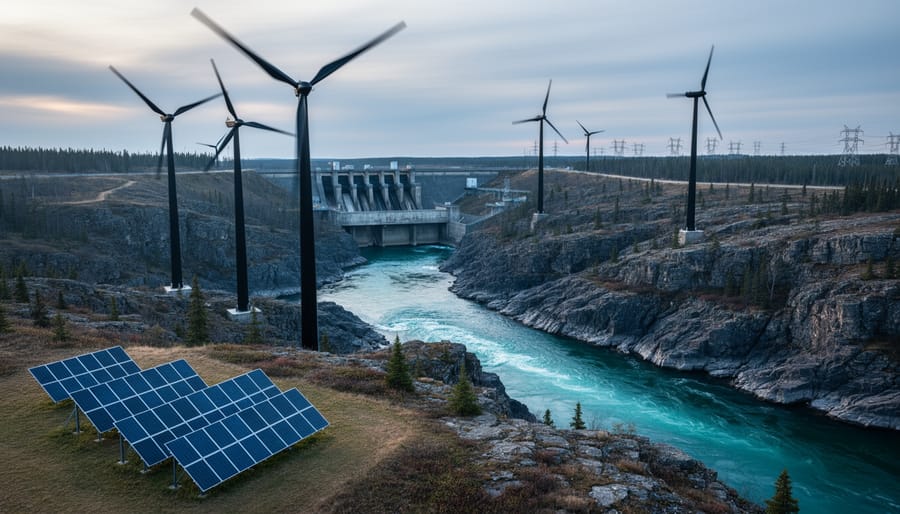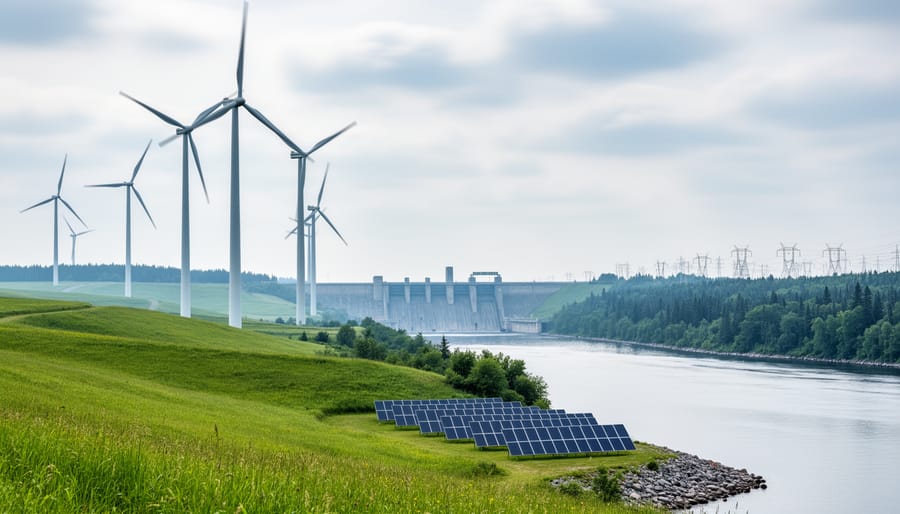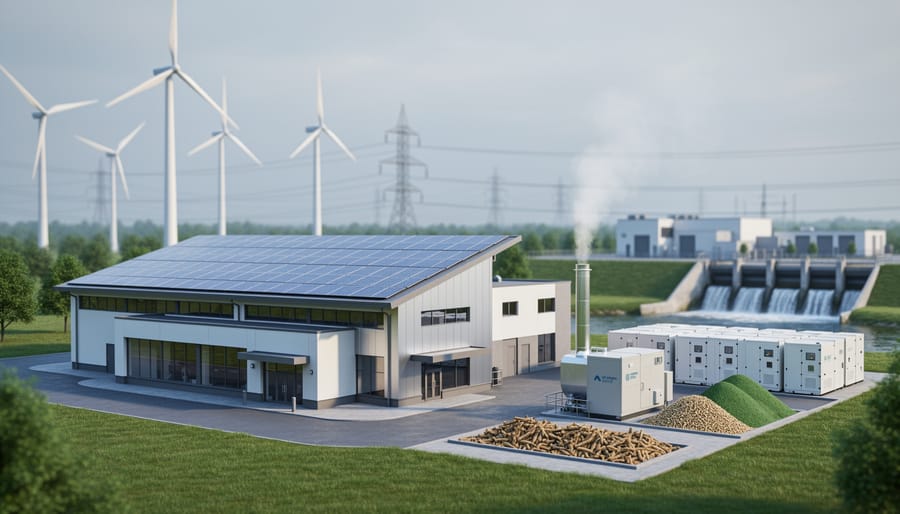
The five most viable renewable energy sources for business interconnection in 2026 are solar photovoltaic systems, onshore wind turbines, battery energy storage systems, combined heat and power biomass units, and small-scale hydroelectric generators. Each offers distinct advantages for connecting to existing power infrastructure, with solar leading for scalability and straightforward grid integration, wind for high-capacity generation, batteries for load balancing and demand response participation, biomass for baseload reliability, and hydro for consistent output with minimal interconnection complexity.
Business decision-makers evaluating renewable energy investments face a critical challenge: understanding not just which technologies generate clean power, but which ones integrate effectively with their existing electrical infrastructure. The interconnection process determines project timelines, upfront costs, and long-term operational flexibility. A solar array that takes six months to interconnect delivers faster ROI than a wind project requiring 18 months of utility coordination, even if the wind turbine generates more kilowatt-hours annually.
The selection criteria for these five sources prioritize commercial viability, proven interconnection standards, and compatibility with distribution-level grid connections typical of business facilities. We’ve excluded emerging technologies like tidal and geothermal due to geographic limitations and complex interconnection requirements that place them outside practical consideration for most commercial operations. What remains represents the core renewable portfolio accessible to businesses across diverse sectors and locations, each with established interconnection procedures and predictable implementation pathways.
Understanding how each technology interfaces with your utility provider and existing electrical systems directly impacts project success. The following analysis breaks down the interconnection characteristics, technical requirements, and practical implementation considerations that distinguish these five renewable sources in the commercial energy landscape.
Selection Criteria: Evaluating Renewable Energy Sources for Interconnection
Selecting the right renewable energy sources for business interconnection requires evaluating multiple technical and practical factors beyond simple energy production. The five sources featured in this article earned their positions based on proven interconnection performance, commercial viability, and demonstrated success in Canadian business environments.
Interconnection compatibility stands as the primary selection criterion. Each source must connect reliably to existing grid infrastructure without causing voltage fluctuations, harmonic distortion, or frequency instabilities that utilities reject during technical review. The sources chosen integrate smoothly with standard electrical systems used across Canadian commercial facilities, minimizing costly grid upgrades and reducing interconnection approval timelines.
Scalability matters because business energy needs vary dramatically. A small manufacturing facility requires different capacity than a large distribution center. The selected renewable sources offer flexible deployment options, from kilowatt-scale installations to multi-megawatt systems, allowing businesses to match generation capacity to their actual consumption patterns and growth projections.
Our evaluation framework considered these essential criteria:
- Interconnection compatibility with Canadian utility standards and existing electrical infrastructure
- Scalability from small commercial installations to large industrial deployments
- Reliability across varying weather conditions and seasonal patterns
- Storage integration capabilities to address intermittency and optimize grid interaction
- Regulatory and permitting feasibility within current provincial frameworks
Grid compatibility extends beyond basic connection requirements. Sources must provide predictable power characteristics that utilities can model and manage. Each technology in our list demonstrates stable performance metrics that facilitate smoother interconnection agreements and faster approval processes.
Energy storage integration became a critical selection factor as grid operators increasingly value dispatchability. Renewable sources that pair effectively with battery systems or provide inherent storage solve intermittency challenges that complicate interconnection approvals and limit deployment flexibility.
Canadian climate suitability eliminated otherwise viable technologies. Each selected source performs reliably through prairie winters, maintains efficiency during temperature extremes, and leverages regional resource advantages. Technologies requiring conditions absent in Canadian climates didn’t make the cut, regardless of their theoretical benefits.
These criteria ensure the five sources presented offer genuine interconnection pathways rather than aspirational concepts, providing business decision-makers with actionable options backed by real-world Canadian deployment data.
The 5 Renewable Energy Sources for Business Interconnection
1. Solar Photovoltaic (PV) Systems
Solar photovoltaic systems have emerged as the frontrunner for business renewable energy adoption because they combine straightforward interconnection with proven grid compatibility. Unlike more complex renewable technologies, solar PV converts sunlight directly into electricity through semiconductor cells, creating DC power that inverters transform into grid-compatible AC electricity. This simple conversion process makes interconnection remarkably clean from a technical standpoint.
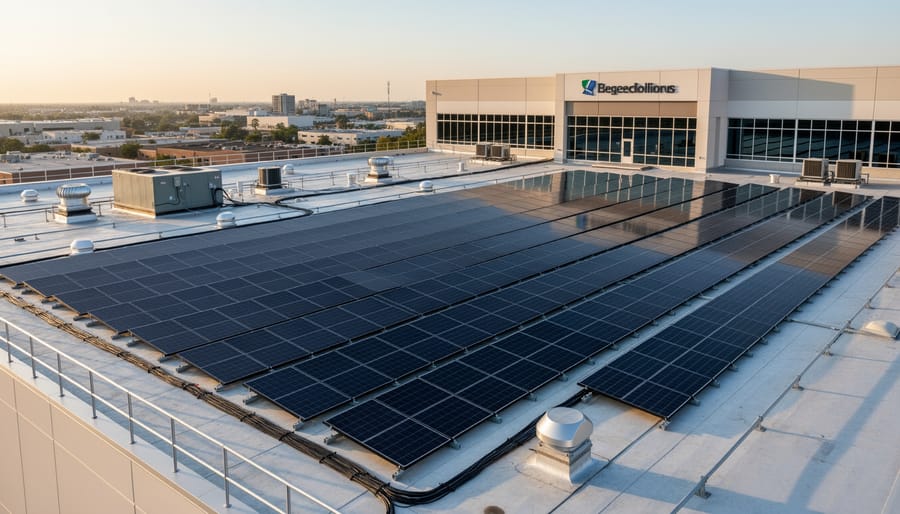
Businesses can deploy solar PV in two primary configurations, each with distinct interconnection characteristics. Rooftop systems leverage existing building infrastructure, connecting directly to a facility’s electrical panel behind the meter. This approach minimizes interconnection complexity because the system feeds power to on-site loads first, with excess flowing to the grid only when generation exceeds consumption. Ground-mount installations offer greater capacity and optimal panel orientation but require more extensive interconnection studies since they often connect at higher voltages.
The interconnection advantage that sets solar apart is net metering availability across most Canadian jurisdictions. When your system generates more power than your business consumes, the excess flows to the grid and your meter literally runs backward, crediting your account at retail rates. This bidirectional energy exchange creates immediate financial value without complex power purchase agreements. Canada’s growing solar adoption reflects both falling equipment costs and streamlined interconnection procedures that utilities have refined over the past decade.
Modern inverters handle the technical heavy lifting of grid synchronization, continuously monitoring voltage and frequency to ensure your solar output matches grid parameters exactly. When grid power fails, these same inverters disconnect your system within milliseconds to protect utility workers, a safety requirement embedded in all interconnection agreements. For businesses seeking the most accessible entry point to renewable interconnection, solar PV delivers the combination of mature technology, supportive policies, and straightforward grid integration that minimizes both technical and regulatory barriers.
2. Wind Energy Systems
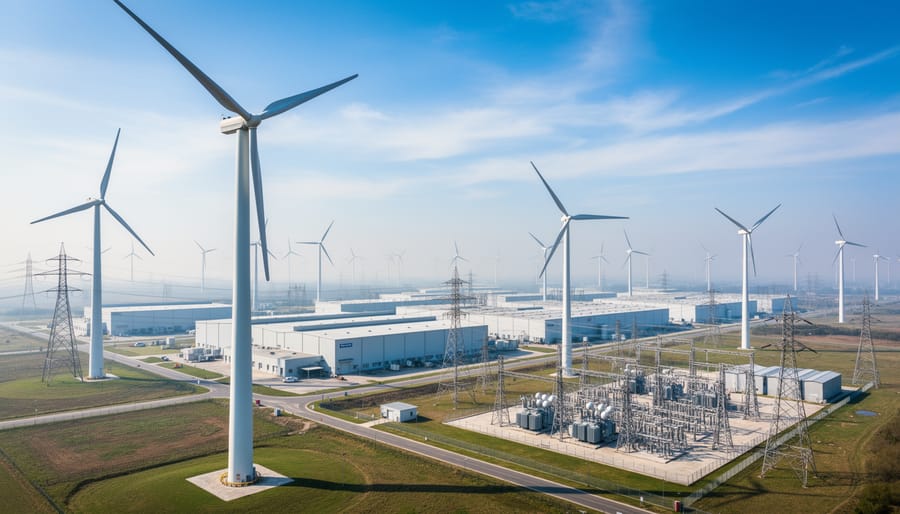
Wind energy systems offer businesses a proven renewable solution with distinct interconnection advantages, particularly in Saskatchewan where average wind speeds exceed 5 meters per second across most of the province. Commercial wind turbines range from 10 kW on-site systems suitable for small operations to multi-megawatt installations serving larger facilities or campus environments.
The interconnection appeal of wind energy stems from its power curve characteristics. Unlike solar, which peaks midday, wind generation often strengthens during evening hours and winter months, creating natural complementarity with solar systems. This timing reduces peak demand charges and provides more consistent power delivery across 24-hour cycles. Modern turbines feature sophisticated inverters that maintain grid frequency and voltage stability, making interconnection approval more straightforward than earlier wind technologies.
Saskatchewan’s wind resource ranks among Canada’s best, with capacity factors between 30% and 40% for well-sited turbines. That means a 100 kW system generates roughly 35,000 kWh annually per installed kilowatt, translating to meaningful energy cost reductions for businesses with sufficient land or rooftop space. Vertical-axis wind turbines have emerged as viable options for urban and industrial sites where traditional horizontal-axis designs face zoning restrictions.
Interconnection requirements for wind systems include power quality assessments and flicker studies to ensure turbine operation won’t disrupt nearby equipment or grid stability. Utilities typically require meteorological data spanning at least one year before approving larger installations. Wind’s variable output makes it an ideal candidate for hybrid systems paired with solar and battery storage, smoothing power delivery and maximizing interconnection capacity utilization. The combination addresses utilities’ primary concern about variable renewable energy impacting grid reliability while optimizing your infrastructure investment.
3. Energy Storage Systems (Battery Technology)
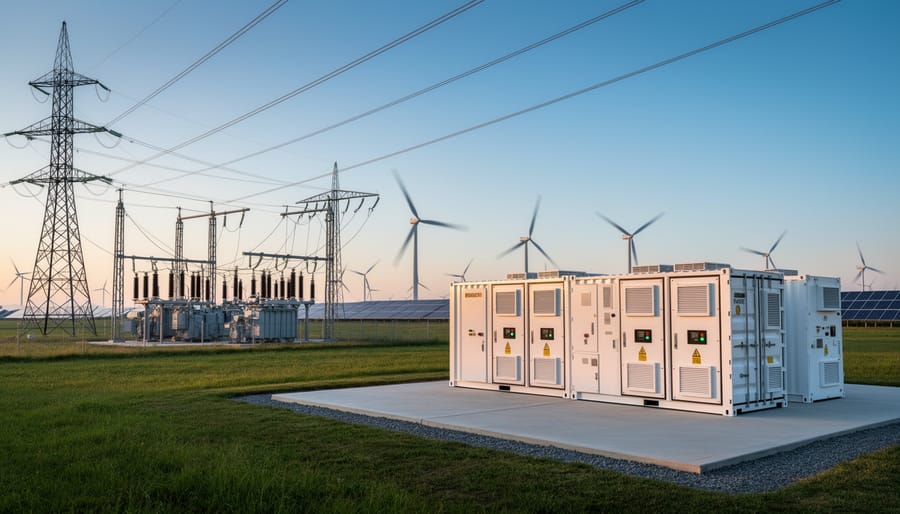
Energy storage systems represent a transformative component in renewable energy interconnection, functioning as both a power source and critical infrastructure that enables other renewables to perform reliably. While batteries themselves don’t generate electricity, they store excess energy from solar, wind, and other sources, then discharge it precisely when needed, making them indispensable for businesses managing interconnection with the grid.
Lithium-ion batteries dominate commercial installations in 2026 due to their proven performance, declining costs, and modular scalability. These systems charge during periods of high renewable generation or low electricity rates, then discharge during peak demand hours when grid power is most expensive. This peak shaving capability directly reduces demand charges, often the largest component of commercial electricity bills, while simultaneously easing stress on interconnection points during high-load periods.
Emerging technologies are expanding what storage can deliver. Flow batteries offer longer discharge durations ideal for businesses needing power over extended periods, while solid-state batteries promise higher energy density and improved safety profiles. Some commercial installations now combine different battery chemistries to optimize both rapid response and sustained discharge capabilities.
From an interconnection perspective, storage systems solve the fundamental challenge that has historically limited renewable adoption: intermittency. When your solar array produces more power than your facility needs, batteries capture that surplus rather than forcing it back through the interconnection point or curtailing generation. During cloudy periods or overnight hours, stored energy maintains operations without drawing from the grid.
Storage also provides valuable grid services that can generate revenue or offset interconnection costs. Frequency regulation, voltage support, and demand response participation turn your battery system into an asset that supports grid stability while improving your facility’s power quality. Many utilities in 2026 offer incentive programs specifically for storage installations that can provide these services, recognizing how distributed battery systems strengthen overall grid resilience and reduce the need for expensive infrastructure upgrades at interconnection points.
4. Biomass and Biogas Energy
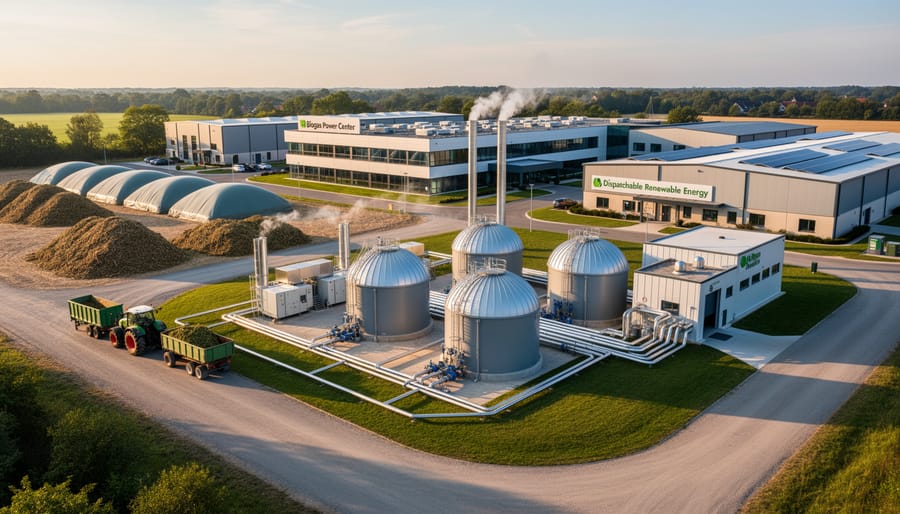
Biomass and biogas energy systems offer a unique advantage for businesses with organic waste streams: they generate dispatchable renewable power that runs continuously, unlike solar or wind. This makes them exceptional for interconnection because they provide consistent baseload electricity that grid operators value highly.
Biomass systems burn organic materials, wood chips, agricultural residues, or energy crops, to produce heat and electricity. Biogas systems capture methane from decomposing organic waste through anaerobic digestion, then burn it in generators. Food processors, farms, breweries, and manufacturing facilities with significant organic waste can turn disposal costs into revenue-generating power plants.
The interconnection advantage lies in reliability. While solar peaks at midday and wind fluctuates with weather, biogas generators produce steady output 24/7. This baseload characteristic simplifies grid integration, utilities don’t need to manage variability, and your facility avoids demand charges by maintaining consistent power production. Grid operators increasingly prioritize these attributes as variable renewables expand across their networks.
Combined heat and power applications multiply the benefits. A biogas CHP system generates electricity for your operations while capturing waste heat for space heating, water heating, or industrial processes. This dual output can push overall efficiency above 80%, dramatically reducing total energy costs while minimizing grid dependency.
For 2026 interconnection projects, biogas and biomass systems face fewer technical hurdles than variable renewables. Your power output profile resembles conventional generation, which utilities understand well. Interconnection studies typically show minimal grid upgrades needed, and agreements process faster because you’re adding stabilizing capacity rather than intermittent load.
The key consideration is feedstock availability. Your waste stream must support continuous operation, or you’ll need reliable supply contracts. Capital costs run higher than solar, but operational savings and waste disposal benefits often justify investment within five to eight years for businesses with suitable organic resources.
5. Hybrid Renewable Energy Systems
Hybrid renewable energy systems represent the evolution of business power solutions, combining two or more renewable sources into a single integrated infrastructure. Rather than relying on solar panels alone or a standalone wind turbine, these systems merge complementary technologies, typically solar, wind, and battery storage, to deliver more consistent power output and overcome individual source limitations.
The fundamental advantage lies in natural compensation. Solar generates peak power during daylight hours while wind often produces strongest output at night and during seasonal transitions. When paired together, these sources fill each other’s generation gaps, creating a more stable power profile that reduces reliance on grid electricity. Adding battery storage completes the system by capturing excess generation for use during low-production periods, further smoothing power delivery.
For interconnection purposes, hybrid systems offer compelling benefits that single-source installations cannot match. The improved capacity factor, the percentage of theoretical maximum output actually achieved, means businesses draw less supplemental power from the grid during renewable production lulls. This reduced grid dependency translates to lower interconnection capacity requirements and less stress on utility infrastructure during peak demand periods.
Utility companies increasingly favor hybrid renewable projects because they present fewer grid stability challenges. A 150kW solar array paired with a 50kW wind turbine and 100kWh battery system provides more predictable load profiles than a 200kW solar-only installation, making power flow modeling simpler and interconnection approval faster. Some Canadian utilities now offer expedited review processes specifically for hybrid systems that include storage components.
The interconnection agreement itself becomes more straightforward with hybrid designs. Instead of managing multiple separate connections and metering arrangements, businesses establish a single point of common coupling where the integrated system connects to the grid. This consolidation reduces engineering costs, simplifies compliance documentation, and cuts interconnection timeline from application to energization by 20 to 40 percent compared to phased single-source installations.
Interconnection Considerations Across All Five Sources
Regardless of which renewable energy source your business selects, you’ll navigate similar interconnection fundamentals. Understanding these shared requirements streamlines your planning and prevents costly delays.
Every project begins with a utility interconnection agreement, the legal contract governing how your system connects to the grid. This document specifies technical requirements, safety protocols, metering arrangements, and export limits. Utility approval timelines in 2026 typically range from three to nine months depending on system size and grid capacity at your connection point. Smaller systems under 500 kW generally move faster through simplified interconnection queues, while larger installations trigger more comprehensive reviews.
Grid impact studies evaluate how your renewable system affects local electrical infrastructure. For systems exceeding 100 kW, utilities commonly require power flow analysis, voltage regulation assessment, and fault current calculations. These studies identify necessary upgrades, transformer replacements, line reinforcements, or protection equipment, and determine who bears those costs. Proactive coordination with your utility during design phases often reveals simple modifications that avoid expensive network improvements.
Technical standards compliance is non-negotiable. Your equipment must meet IEEE 1547-2018 interconnection specifications, CSA electrical safety codes, and your specific utility’s engineering requirements. Anti-islanding protection, frequency and voltage ride-through capabilities, and proper grounding all factor into approval. Working with certified installers familiar with Canadian interconnection standards prevents rejection and rework.
Budget adequate time and capital for interconnection. Beyond equipment costs, expect engineering fees ($5,000, $25,000), utility application charges ($500, $3,000), insurance requirements, and potential system upgrades. The most successful projects treat interconnection as an integrated workstream from day one, not an afterthought once panels or turbines are ordered.
items
Solar Photovoltaic Systems lead business interconnection projects with proven grid compatibility and the fastest approval timelines. Rooftop installations qualify for net metering in most provinces, allowing businesses to offset electricity costs while feeding excess power back to the grid.
Wind Energy Systems deliver higher capacity factors in open locations, making them ideal for industrial sites and agricultural businesses. Modern turbines synchronize seamlessly with grid frequency requirements and complement solar generation patterns.
Energy Storage Systems have become essential infrastructure rather than optional additions. Battery installations smooth power delivery, qualify for demand charge reductions, and enable participation in ancillary grid services markets.
Biomass and Biogas Energy provide dispatchable baseload power that utilities favor during interconnection reviews. Businesses with organic waste streams can achieve energy independence while supporting grid stability during peak demand periods.
Hybrid Renewable Systems combining solar, wind, and storage represent the interconnection gold standard for 2026. Integrated designs reduce equipment costs, simplify permitting, and deliver consistent power profiles that minimize grid impact concerns.
Recap: Choosing Your Interconnection Path
Selecting the right renewable energy source for your business starts with understanding your operational needs and interconnection requirements. Solar PV offers the most straightforward interconnection path with mature technology and widespread utility familiarity. Wind systems excel where consistent wind resources exist and space permits larger installations. Energy storage enhances any renewable deployment by smoothing power delivery and providing grid services that utilities value.
Biomass and biogas shine for businesses with organic waste streams, delivering dispatchable power that eases interconnection concerns around intermittency. Hybrid systems combining multiple sources represent the future of business renewable energy, providing reliability that simplifies utility approval while maximizing energy independence.
Your interconnection path depends on three factors: available space and resources, capital budget and timeline, and grid connection capacity at your site. Businesses with limited roof space might prioritize solar plus storage. Operations with large land areas and strong wind resources can consider wind-solar hybrids. Those generating organic waste should evaluate biogas first.
Proper interconnection planning prevents costly delays and ensures your renewable investment delivers expected returns. Start by requesting a preliminary interconnection study from your utility to understand site-specific constraints and opportunities.
Frequently Asked Questions
Businesses new to renewable energy often have similar concerns about connecting systems to the grid. These questions cover the fundamental aspects of interconnection that affect project timelines, budgets, and technical requirements.
What is interconnection in renewable energy?
Interconnection is the process of connecting your renewable energy system to the electrical grid or creating an integrated power network. It involves technical assessments, utility agreements, and compliance with safety standards to ensure your system operates safely alongside grid infrastructure.
How long does the interconnection process take?
Interconnection timelines in 2026 typically range from three to twelve months, depending on system size and complexity. Smaller commercial systems under 100 kW often receive faster approval, while larger installations require more extensive grid impact studies and utility coordination.
Can I interconnect multiple renewable energy sources?
Yes, hybrid systems combining solar, wind, and storage can share a single interconnection point. This approach often simplifies the approval process and reduces costs compared to interconnecting each source separately.
What are the typical interconnection costs?
Interconnection costs vary widely based on system size, grid proximity, and required infrastructure upgrades. Budget between $5,000 and $50,000 for commercial projects, with utility fees, impact studies, and necessary equipment representing the main expenses.
Do I need utility approval before installing renewable energy?
Absolutely. Grid-connected renewable energy systems require formal utility approval and an interconnection agreement before operation. Starting the approval process early prevents costly project delays and ensures your system meets all technical requirements.
Saskatoon Wind & Solar Solutions guides businesses through every step of the interconnection journey, from initial utility applications to final commissioning. Our team handles technical assessments, manages utility communications, and ensures your renewable energy system meets all interconnection standards while staying on schedule and within budget.