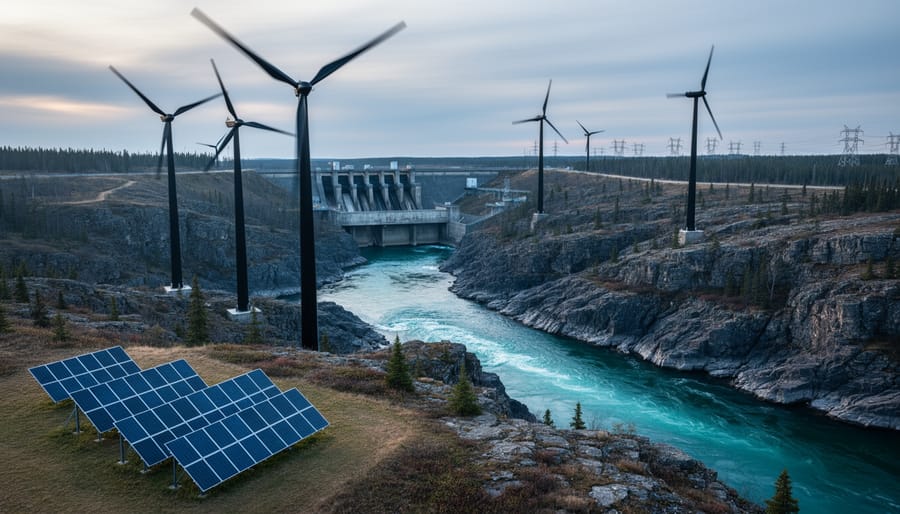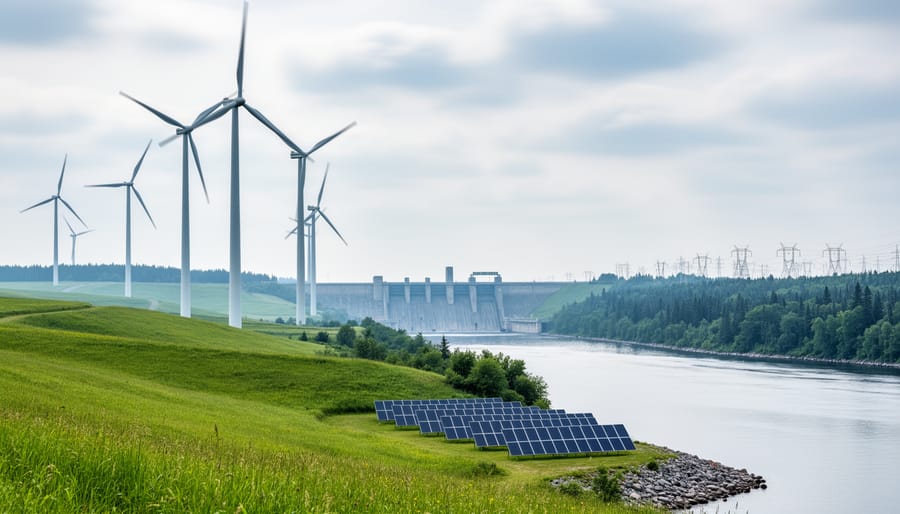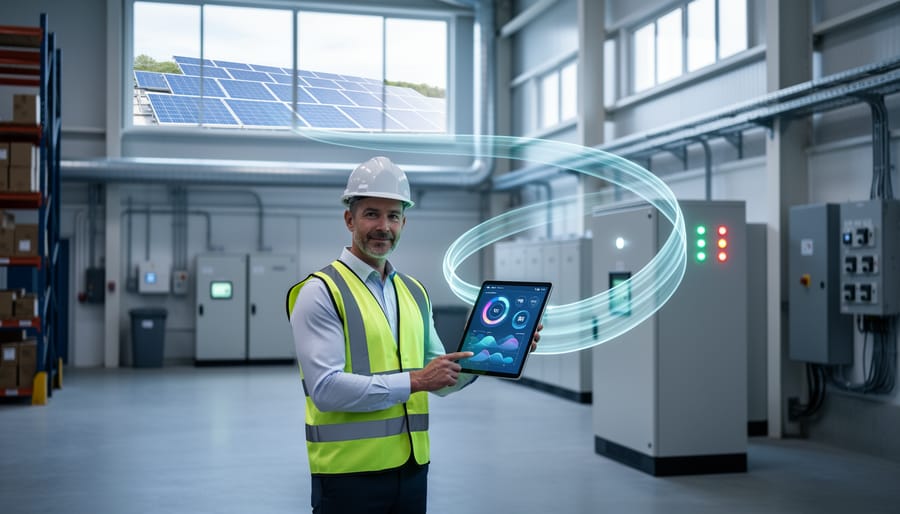
Innovative sustainable solutions transform business operations by combining cutting-edge technology with environmental responsibility to deliver measurable cost savings, regulatory compliance, and competitive advantage. These solutions go beyond basic “green” initiatives because they fundamentally redesign how businesses consume energy, manage resources, and operate facilities through advanced technologies like AI-driven energy management, circular economy systems, and smart grid integration.
The distinction matters for decision-makers in 2026. A truly innovative approach doesn’t simply swap one energy source for another. It reimagines entire systems to eliminate waste, optimize performance in real time, and adapt to your specific operational needs. Manufacturing facilities now use predictive analytics to reduce energy consumption by 30-40% while maintaining production targets. Commercial buildings deploy intelligent HVAC systems that learn occupancy patterns and adjust automatically. Distribution centers integrate renewable microgrids with battery storage to slash utility costs and maintain operations during grid disruptions.
Business leaders prioritize these solutions because they deliver triple-bottom-line results: reduced operating expenses, enhanced brand reputation, and future-proofed infrastructure. The technology has matured beyond pilot programs into proven, scalable systems with clear return-on-investment timelines, typically 3-7 years depending on industry and application.
What makes a solution genuinely innovative comes down to three factors: measurable performance improvement over conventional alternatives, integration capability with existing infrastructure, and adaptability to evolving business requirements. Understanding these criteria helps you evaluate proposals effectively and identify the right partners to guide your transition toward more sustainable, profitable operations.
What Makes a Sustainable Solution Truly Innovative
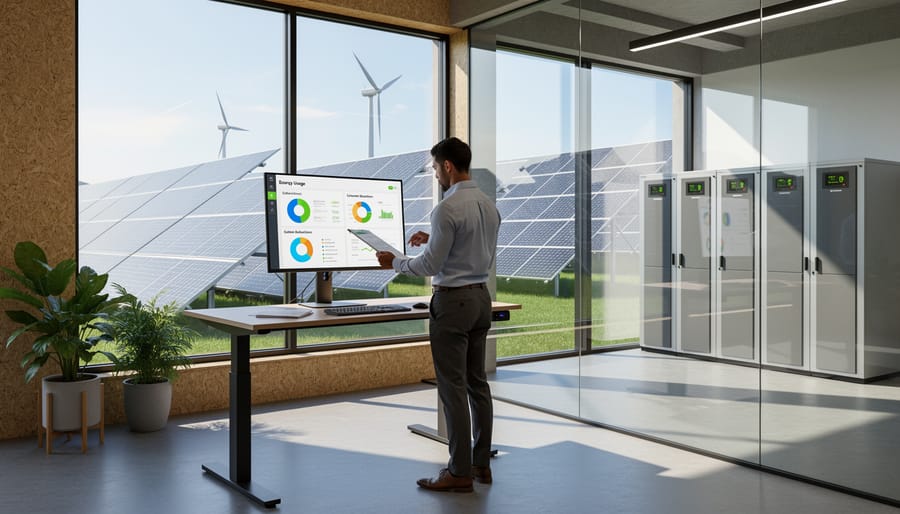
A sustainable solution becomes truly innovative when it delivers measurable environmental and business value while adapting to your specific operational context. Traditional green initiatives often focus on compliance or surface-level improvements like switching to LED bulbs or implementing basic recycling programs. Innovative sustainable solutions go further by fundamentally rethinking how your business consumes resources, generates waste, and operates day-to-day.
The hallmark of innovation in sustainability is adaptability. Unlike off-the-shelf green products, innovative approaches are designed to flex with your business needs, seasonal variations, and growth trajectory. A solar installation that automatically adjusts output based on real-time demand patterns, for instance, demonstrates this adaptive quality. The system learns your operational rhythms and optimizes accordingly, rather than simply generating a fixed amount of clean energy.
Scalability separates genuinely innovative sustainable solutions from limited pilot projects. An effective solution should grow with your business without requiring complete redesign. When you expand to a second facility or increase production capacity, the sustainable infrastructure scales seamlessly. This means the technology architecture, data systems, and operational processes are built for expansion from day one.
Integration capabilities determine whether a sustainable solution enhances or disrupts your existing operations. Innovative solutions plug into your current energy management systems, manufacturing equipment, and business software without forcing wholesale replacement. They communicate with legacy infrastructure through standardized protocols and provide unified dashboards that give you comprehensive visibility.
Measurable impact distinguishes innovation from greenwashing. Truly innovative sustainable solutions deliver quantifiable results through precise monitoring, transparent reporting, and verifiable outcomes. You receive concrete data on energy savings, emissions reductions, water conservation, and cost benefits rather than vague sustainability claims. This measurement capability not only proves ROI but also identifies further optimization opportunities, creating a cycle of continuous improvement that drives competitive advantage through operational excellence and resource efficiency.
Customized Sustainable Solutions Across Different Industries
Energy Industry Innovations
The energy sector demonstrates how innovative sustainable solutions deliver measurable operational gains through customized design. Forward-thinking businesses now deploy hybrid power systems that combine multiple renewable energy sources, typically solar, wind, and battery storage, calibrated to their specific consumption patterns and geographic location. These integrated configurations provide continuous power availability while dramatically reducing fossil fuel dependency, with many installations achieving 70-80% renewable penetration rates.
Off-grid capabilities represent another frontier in energy innovation. Advanced microgrid systems equipped with intelligent load management can maintain critical operations during grid outages while optimizing energy costs during normal conditions. These solutions prove particularly valuable for facilities in remote locations or areas with unreliable grid infrastructure, eliminating downtime costs that can exceed thousands of dollars per hour.
Energy storage innovations have transformed renewable deployment from intermittent power sources into reliable baseload alternatives. Modern lithium-ion and flow battery systems, sized precisely for individual business needs, store excess generation during peak production hours and discharge during high-demand periods or utility peak pricing windows. Businesses implementing these customized storage solutions typically reduce energy costs by 20-40% while securing operational resilience against power disruptions.
Wastewater and Environmental Applications
Water management presents one of the most pressing operational challenges for modern businesses, particularly those in manufacturing, hospitality, and food processing. Customized sustainable solutions in this sector go far beyond basic filtration, implementing advanced systems that treat, recover, and reuse water multiple times within a single facility.
Membrane bioreactor technology now allows companies to achieve near-drinking-water quality from industrial wastewater, dramatically reducing both discharge costs and freshwater intake. One food processing plant in California cut its municipal water consumption by 67% after installing a tailored closed-loop system that recovers water from cooling operations, cleans it through biofilm reactors, and redirects it to non-contact processes.
Resource recovery represents another frontier where innovation meets sustainability. Modern wastewater treatment can extract valuable nutrients like phosphorus and nitrogen for agricultural reuse, while anaerobic digestion systems convert organic waste into biogas that powers facility operations. These approaches transform what was once a cost center into a revenue-generating asset.
The key to effective implementation lies in precise customization. A pharmaceutical manufacturer requires different treatment protocols than a textile operation, with solutions calibrated to specific contaminants, flow rates, and regulatory requirements. Advanced monitoring systems continuously adjust treatment parameters in real time, ensuring optimal performance while minimizing chemical usage and energy consumption.
Aerospace and Defense Adaptations
Aerospace and defense operations demand innovative sustainable solutions that meet exacting performance standards while reducing environmental impact. Unlike commercial applications, these sectors require technologies that perform reliably under extreme conditions, from high altitudes to remote deployments, where failure isn’t an option.
Lightweight composite materials represent a breakthrough in this field. Advanced carbon fiber and bio-based composites reduce aircraft weight by up to 20%, directly cutting fuel consumption and emissions without compromising structural integrity. These materials undergo rigorous testing to ensure they withstand temperature extremes, vibration, and stress loads far beyond commercial requirements.
Power systems for defense applications increasingly incorporate hybrid solutions combining solar arrays with advanced battery storage. Remote installations and forward operating bases benefit from solar microgrids that eliminate fuel convoys, a major operational risk and cost factor. Modern systems deliver consistent power in austere environments while reducing the logistics footprint by 40% or more.
Mission-critical applications also leverage efficient thermal management systems. Innovative cooling technologies using phase-change materials and heat recovery systems maintain equipment performance in harsh climates while reducing energy demands by 30-50%. This proves essential for radar systems, communications equipment, and data centers operating in extreme conditions.
The key differentiator: these innovative sustainable solutions enhance operational capability rather than compromise it. They reduce dependence on vulnerable supply chains, lower operational costs, and meet increasingly stringent environmental regulations governing defense activities, proving that sustainability and performance can align even in the most demanding applications.
Technologies Driving Innovation in Sustainable Solutions
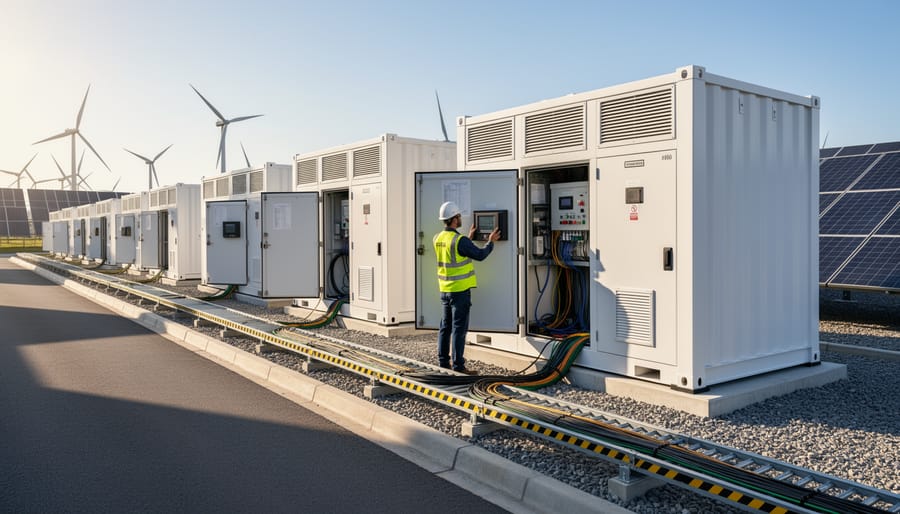
The technological foundation of innovative sustainable solutions combines established renewable platforms with sophisticated control and optimization systems that enable unprecedented customization. These technologies work together to create solutions tailored to specific operational requirements while delivering measurable environmental and economic benefits.
Advanced solar photovoltaic systems now incorporate bifacial panels that capture reflected light from both sides, increasing energy generation by up to 30% in optimal installations. Modular solar designs allow businesses to scale capacity precisely to their needs, starting small and expanding as requirements grow. Meanwhile, next-generation wind turbines feature variable-speed designs and smart blade pitch control that maximize energy capture across diverse wind conditions, making wind power viable for locations previously considered unsuitable.
- Smart Energy Management Systems
- Software platforms that monitor energy consumption patterns in real-time and automatically adjust system operation to optimize efficiency, reduce waste, and align energy use with production or availability peaks. These systems learn from operational data to continuously improve performance.
- AI-Driven Optimization
- Machine learning algorithms that analyze weather forecasts, historical usage data, and operational schedules to predict energy demand and automatically configure renewable systems for maximum efficiency. This technology enables proactive rather than reactive energy management.
- Integrated Energy Storage Solutions
- Battery systems and alternative storage technologies that capture excess renewable energy during peak production periods and release it when needed, ensuring consistent power availability regardless of weather conditions or time of day.
- IoT Sensor Networks
- Interconnected monitoring devices that track performance metrics across all system components, providing the granular data needed for customization and enabling predictive maintenance before failures occur.
Energy storage represents perhaps the most transformative technology enabling customized renewable solutions. Modern lithium-ion systems offer rapid response times and declining costs, while emerging alternatives like flow batteries provide longer-duration storage for applications requiring multi-day backup capacity. Storage technology transforms intermittent renewable sources into reliable baseload power, addressing one of the primary historical limitations of sustainable energy.
Digital twin technology creates virtual replicas of physical renewable energy systems, allowing businesses to test configuration changes and predict performance outcomes before implementing modifications. These simulations reduce risk and accelerate optimization, enabling rapid customization without expensive trial-and-error approaches.
Microgrids integrate multiple technologies into self-contained energy networks that can operate independently or connect to the main grid. This architecture provides exceptional flexibility, allowing businesses to configure systems that match their specific reliability requirements, energy security priorities, and operational patterns while maintaining the option to draw from or contribute to the broader grid as conditions warrant.
The Business Case for Innovative Sustainable Solutions
Adopting innovative sustainable solutions delivers measurable financial returns that extend far beyond environmental benefits. Businesses implementing customized renewable energy systems typically see energy cost reductions of 20-40% within the first three years, with solar and hybrid systems often achieving payback periods of five to seven years. These savings compound over time as traditional energy costs continue rising while renewable infrastructure costs remain predictable.
Risk mitigation represents another compelling advantage. Companies diversifying their energy sources through innovative sustainable solutions reduce exposure to utility price volatility and supply disruptions. Organizations with on-site renewable generation maintained operations during grid outages that shuttered competitors, demonstrating how sustainability investments strengthen business continuity. This resilience proves particularly valuable for operations where downtime costs thousands per hour.
Regulatory compliance becomes simpler and less expensive when your business energy strategy incorporates forward-thinking sustainable solutions. Rather than scrambling to meet tightening environmental regulations, companies with established renewable systems find themselves ahead of requirements, avoiding costly rushed implementations and potential penalties. Many jurisdictions now offer tax incentives, accelerated depreciation, and grants specifically for innovative sustainable technologies, improving project economics significantly.
Brand value and market positioning benefits often surprise decision-makers focused primarily on operational metrics. Customers increasingly favor environmentally responsible suppliers, with procurement departments at major corporations requiring sustainability commitments from vendors. Businesses demonstrating genuine innovation in sustainability win contracts, attract top talent who prioritize purpose-driven employers, and command premium positioning in their markets.
Financing options have evolved to make implementation accessible regardless of capital constraints. Power purchase agreements allow businesses to adopt renewable systems with zero upfront investment, paying only for the energy produced at rates below traditional utility costs. Equipment financing, green bonds, and sustainability-linked loans provide additional pathways for organizations at any stage of financial maturity to begin their transition to innovative sustainable solutions.
How to Choose the Right Customized Sustainable Solution
Selecting the right customized sustainable solution requires a methodical approach that balances your immediate operational needs with long-term business objectives. The decision process becomes simpler when you break it down into clear, actionable steps that ensure you invest in solutions that deliver genuine value.
- Conduct a comprehensive operational audit to identify your energy consumption patterns, waste streams, resource inefficiencies, and regulatory requirements specific to your industry and facilities.
- Define measurable sustainability goals that align with your business strategy, whether reducing carbon emissions by a specific percentage, achieving energy independence, or meeting industry certifications.
- Assess scalability requirements by considering future growth plans, potential facility expansions, and how your chosen solution can adapt as your operational demands evolve.
- Research proven vendors with demonstrated expertise in your industry, examining case studies, client references, and their track record implementing similar solutions under comparable conditions.
- Evaluate total lifecycle costs including initial investment, ongoing maintenance, expected energy savings, potential revenue from excess generation, and available incentives or financing options.
- Review technical compatibility to ensure new systems integrate seamlessly with your existing infrastructure, including interconnection planning for renewable energy projects and compatibility with current operational technologies.
- Develop implementation timelines that minimize operational disruption, accounting for installation phases, testing periods, staff training, and the transition from legacy systems.
- Establish performance metrics before implementation so you can measure success against baseline data and adjust strategies based on real results rather than assumptions.
Pay particular attention to vendors who offer customization capabilities rather than standard packages. The right partner should conduct site visits, analyze your specific operational challenges, and propose tailored configurations that address your unique requirements. Request detailed proposals that outline system specifications, performance guarantees, warranty terms, and post-installation support.
Implementation planning matters as much as the technology itself. Successful deployments involve cross-functional teams including operations, finance, facilities management, and IT to ensure all stakeholders understand the changes and support the transition. Testing phases allow you to validate performance claims under actual operating conditions before full deployment.
Innovative sustainable solutions represent more than an environmental commitment, they’re a strategic pathway to operational excellence and long-term resilience. The most successful implementations recognize that customization is essential. Your business faces unique challenges, operates within specific constraints, and serves distinct markets. Generic approaches simply cannot deliver the transformative results that tailored solutions provide.
The business landscape of 2026 rewards early adopters who move beyond compliance to embrace innovation as a competitive advantage. Whether you’re optimizing energy systems, streamlining electric interconnection for renewable installations, or implementing industry-specific environmental technologies, the opportunities for meaningful change have never been greater.
The future belongs to organizations that view sustainability not as a cost center but as an innovation driver. Start by assessing your specific needs, engage with experienced partners who understand your industry’s nuances, and build solutions that scale with your growth. The transformation begins with a single decision to pursue customized sustainable solutions designed for your business reality.