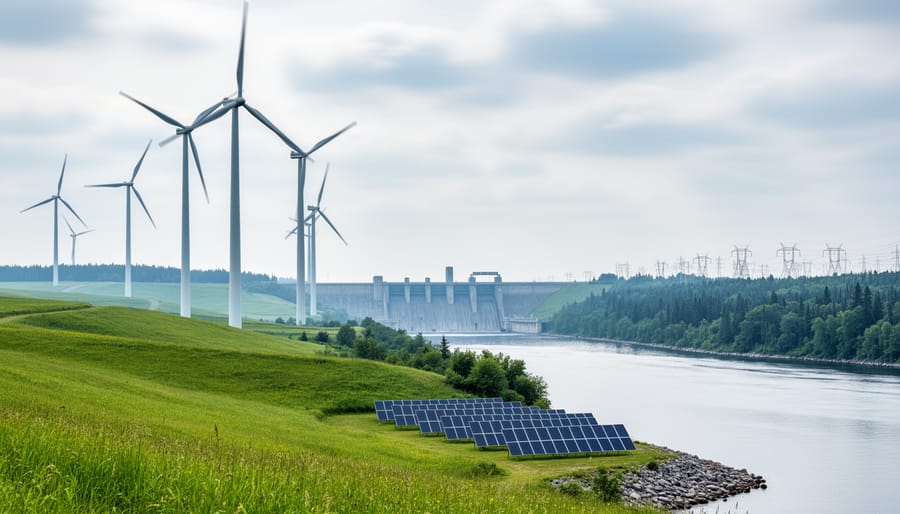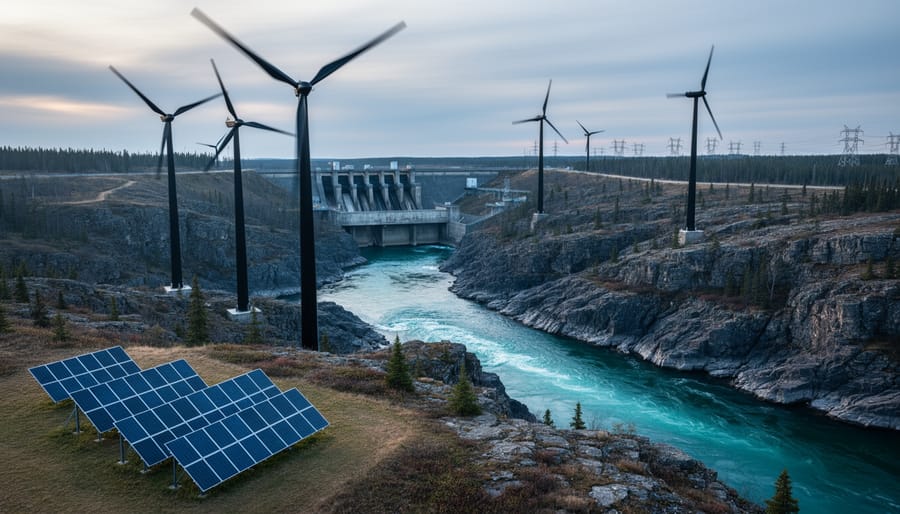
Canada is energy independent. The country produces more energy than it consumes, exporting significant volumes of crude oil, natural gas, and electricity to the United States and other markets. In 2026, Canada ranks among the world’s top energy producers, with vast reserves of hydroelectric power, oil sands, natural gas, and growing renewable capacity that collectively exceed domestic demand by a substantial margin.
But national energy independence tells only part of the story. The structure of Canada’s electricity grid, and who generates that power, directly shapes both energy security and business opportunity. Independent Power Producers have transformed the Canadian energy landscape over the past two decades, shifting electricity generation from a purely utility-controlled monopoly to a more distributed, competitive model. These private generators, ranging from small solar installations to large wind farms, now supply a meaningful share of provincial grids and represent a proven pathway for businesses to participate in the energy transition while strengthening regional energy resilience.
For business owners evaluating renewable energy investments, understanding the IPP framework is essential. Provincial regulations govern who can generate power, how to connect to the grid, what compensation mechanisms exist, and which obligations producers must meet. The opportunity extends beyond simply reducing your own energy costs. Businesses with suitable land, capital, and technical capacity can become power producers themselves, selling electricity back to the grid under long-term contracts that provide stable revenue streams and advance sustainability goals.
This article explains Canada’s energy independence status, then provides a comprehensive guide to the Independent Power Producer framework: eligibility criteria, application processes, contractual rights and obligations, and where to access expert support as you evaluate this strategic business decision.
What Energy Independence Means for Canada
Canada’s Energy Production and Consumption Profile
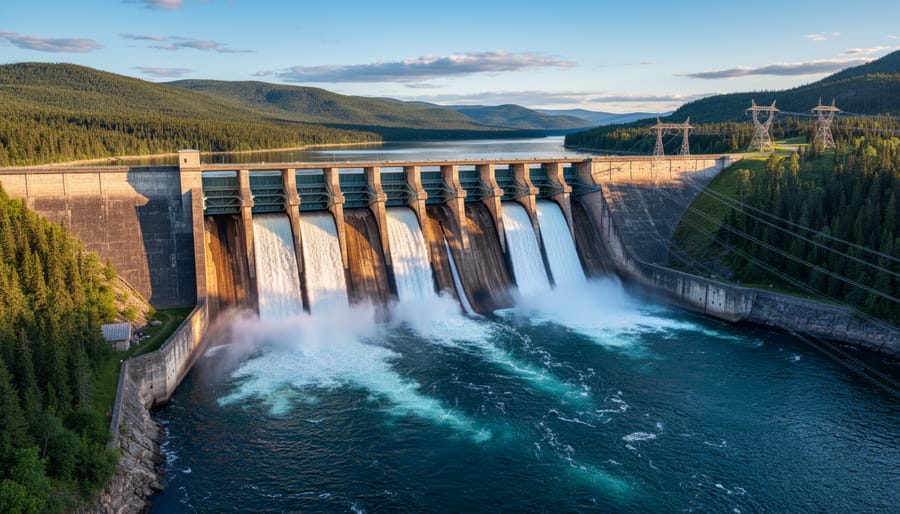
Canada produces significantly more energy than it consumes, ranking among the world’s top energy exporters while maintaining robust domestic supply. As of 2026, the country generates approximately 650 terawatt-hours of electricity annually, with hydroelectricity accounting for roughly 60% of total generation. This dominance reflects Canada’s vast water resources, particularly in Quebec, British Columbia, and Manitoba, where massive hydroelectric installations have powered the grid for decades.
Oil and natural gas remain critical to Canada’s energy landscape, with the country producing about 5.5 million barrels of oil equivalent per day. Alberta’s oil sands operations constitute the largest share of petroleum production, while British Columbia and Alberta lead in natural gas extraction. Despite this production capacity, Canada still imports oil to meet specific regional demands, particularly in Eastern provinces where transportation costs from Western production sites make importing from the United States more economical.
Wind and solar capacity has expanded dramatically over the past decade, now contributing approximately 15% of Canada’s electricity generation. Ontario, Alberta, and Quebec have led the deployment of renewable sources with installed wind capacity exceeding 16,000 megawatts and solar installations growing rapidly across commercial and residential sectors.
Canada consumes roughly 550 terawatt-hours of electricity annually, creating a surplus that feeds export markets, primarily to the United States. This production-consumption gap varies significantly by province, with some jurisdictions importing power during peak demand while others maintain consistent export capacity year-round.
The Role of Independent Power Producers
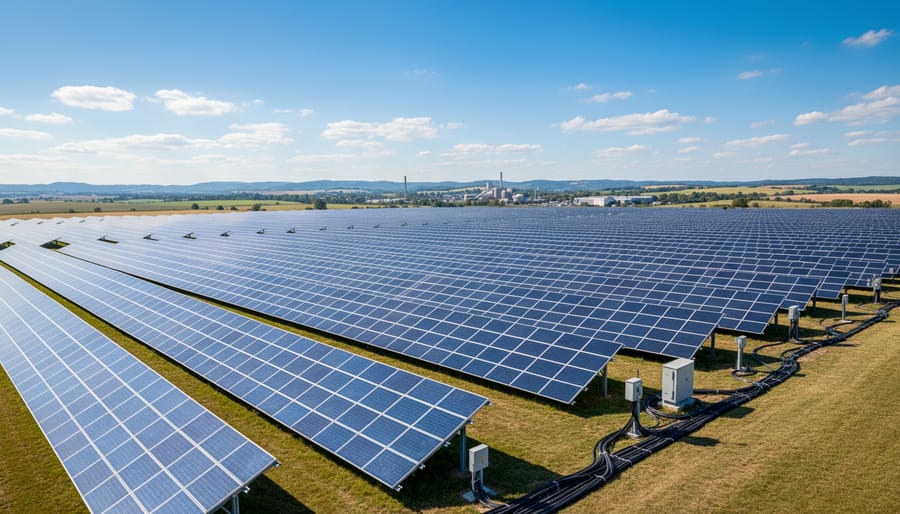
Independent Power Producers (IPPs) are non-utility entities, ranging from private companies to community organizations, that generate electricity and sell it to provincial grids rather than directly to consumers. Unlike traditional utilities that own generation, transmission, and distribution infrastructure, IPPs focus solely on power production, often from renewable sources like wind, solar, and biomass. This specialization allows businesses to enter the energy market without managing the full complexity of utility operations.
IPPs have become instrumental in Canada’s path toward energy independence by rapidly scaling renewable capacity. Between 2020 and 2026, independent producers added over 8,000 megawatts of clean generation nationwide, significantly faster than traditional utilities constrained by regulatory approval cycles and legacy infrastructure. Many Canadian wind projects are now IPP-led, diversifying provincial energy mixes and reducing reliance on fossil fuel imports.
For businesses, becoming an IPP offers dual benefits: strengthening national energy security while creating predictable revenue streams through long-term power purchase agreements. This distributed generation model also enhances grid resilience, as localized renewable sources reduce vulnerability to supply disruptions affecting centralized generation facilities.
Who Qualifies as an Independent Power Producer in Canada
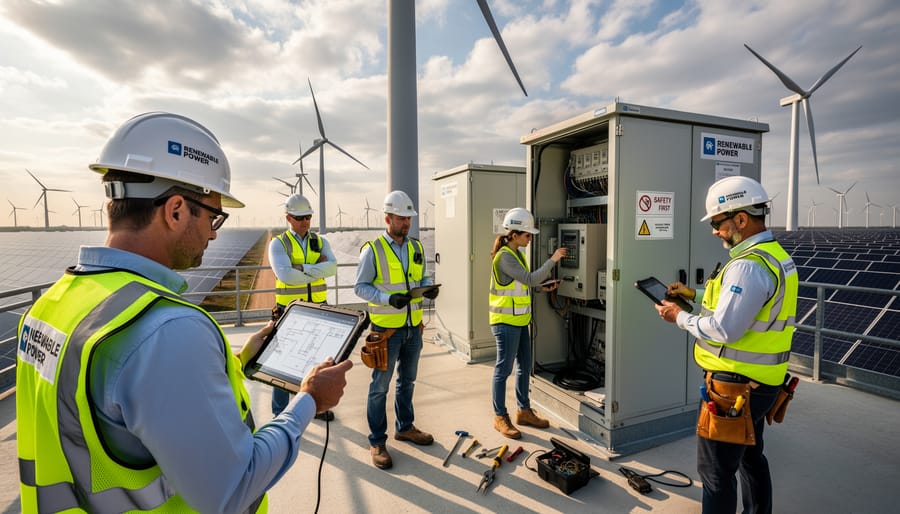
Federal and Provincial Regulatory Frameworks
Canada’s regulatory framework for independent power producers operates as a patchwork of federal oversight and provincial authority, creating both opportunities and complexity for businesses entering the renewable energy sector.
At the federal level, Natural Resources Canada provides strategic direction and coordinates national energy policy, while the Canadian Energy Regulator oversees interprovincial and international transmission lines and export licenses. However, the real regulatory power rests with provincial governments, which control electricity generation, distribution, and retail sales within their borders.
Ontario operates through the Independent Electricity System Operator (IESO), which manages contracts and grid connections for independent power producers through programs like the Feed-in Tariff and more recent competitive procurement processes. Alberta’s Energy and Utilities Board oversees a deregulated market where IPPs sell directly into a competitive pool, offering greater pricing flexibility but more market risk.
British Columbia’s framework centers on BC Hydro’s Standing Offer Program and competitive calls for power, with the British Columbia Utilities Commission providing regulatory oversight. Quebec manages IPPs through Hydro-Québec’s generation procurement process, though opportunities remain limited given the province’s hydroelectric dominance.
Saskatchewan and Manitoba operate hybrid models, with SaskPower and Manitoba Hydro respectively managing IPP integration while their provincial utility commissions set rates and standards. The Atlantic provinces each maintain distinct frameworks, generally welcoming renewable IPPs to diversify from traditional thermal generation.
This provincial variation means businesses must research specific requirements where they plan to operate, as licensing timelines, technical standards, and revenue mechanisms differ substantially across jurisdictions.
Size and Scale Requirements
Canada’s IPP framework accommodates power generation projects across an impressive range of scales, from small rooftop solar installations to utility-scale wind farms. Most provinces classify projects into tiers: micro-generation (typically under 10 kW), small-scale (10 kW to 1 MW), medium-scale (1 MW to 20 MW), and large-scale (above 20 MW). These thresholds determine which regulatory pathways you’ll follow and what technical standards apply.
Micro-generation systems, like a 5 kW solar array on your warehouse roof, face minimal barriers. You’ll need basic electrical permits and an interconnection agreement with your utility, but the process is streamlined. Small businesses often start here, offsetting their own consumption before considering larger investments.
Medium-scale projects, say, a 5 MW solar farm serving multiple facilities, enter more complex territory. You’ll need comprehensive engineering studies, environmental assessments, and grid impact analyses. Provincial regulators scrutinize how your generation affects grid stability and whether transmission upgrades are necessary.
Large-scale developments require the most rigorous oversight: detailed feasibility studies, independent engineering reviews, extensive environmental assessments, and formal capacity allocation through competitive procurement processes in many provinces.
The good news? No minimum size prevents entry. A manufacturing plant can start with a 50 kW solar system and scale up as you gain experience. Provincial agencies increasingly offer tiered application processes that match requirements to project complexity, making independent power production accessible whether you’re deploying 10 kilowatts or 10 megawatts.
How to Become an Independent Power Producer in Canada
Conducting a Feasibility Assessment
Before committing resources to becoming an Independent Power Producer, businesses need to evaluate whether their operations can viably support power generation. A thorough feasibility assessment examines three critical areas that determine project success.
Start with a detailed site analysis. Your property’s physical characteristics, including available land, solar exposure, wind patterns, water access, or proximity to biomass sources, directly impact which renewable technologies are viable. Buildings with south-facing roofs in regions averaging 4+ peak sun hours per day, for example, are strong candidates for solar installations.
Resource assessment quantifies your site’s energy potential. This involves collecting site-specific data over several months to establish baseline generation capacity. Wind sites typically require anemometer readings at hub height, while solar projects need solar radiation measurements accounting for shading and weather patterns throughout the year.
Financial modeling brings these technical assessments together with capital costs, operating expenses, available incentives, and projected revenue from power sales. Calculate your levelized cost of energy, the per-kilowatt-hour cost over the system’s lifetime, and compare it against current electricity rates and expected power purchase agreement terms. Most viable projects show positive cash flow within 7-12 years, though payback periods vary significantly by technology and province.
Navigating the Licensing and Approval Process
The licensing process varies significantly by province, reflecting Canada’s decentralized energy regulatory framework. In Ontario, prospective IPPs submit applications through the Ontario Energy Board, which typically reviews projects within 120-180 days for facilities under 10 MW. Alberta’s process runs through the Alberta Utilities Commission and generally moves faster, often 90-120 days, thanks to the province’s competitive market structure.
Required documentation includes environmental impact assessments, engineering reports detailing system specifications, proof of land rights or tenure, interconnection studies, and financial viability statements. British Columbia requires additional First Nations consultation documentation, which can extend approval timelines by several months but ensures community support for your project.
Quebec’s Hydro-Québec manages the approval process for projects connecting to its grid, requiring French-language submissions and compliance with the province’s renewable energy targets. The Maritime provinces coordinate through their respective public utilities boards, with New Brunswick and Nova Scotia offering streamlined applications for solar projects under 5 MW.
Common challenges include incomplete environmental assessments that trigger review delays, insufficient grid capacity studies that require costly upgrades, and underestimating consultation requirements with Indigenous communities and local stakeholders. Many businesses find that hiring experienced regulatory consultants familiar with their province’s specific procedures reduces approval time by 30-40% and prevents costly resubmissions.
Budget six to twelve months for the complete approval cycle in most provinces, with remote locations or larger facilities requiring extended timelines.
Securing Grid Connection and Power Purchase Agreements
Once licensing approvals are in place, connecting to the grid represents the most technically complex phase. The electric interconnection process begins with submitting a connection request to your provincial utility or transmission operator, who will conduct system impact studies to assess how your generation affects grid stability and capacity. These studies typically take three to six months and cost between $15,000 and $100,000 depending on your project size and grid proximity.
Simultaneously, you’ll negotiate a Power Purchase Agreement (PPA) that defines pricing, delivery terms, performance guarantees, and contract duration, typically 15 to 25 years for renewable projects. Provincial utilities may offer standard PPA templates for smaller installations (under 5 MW), while larger projects require custom negotiations. Feed-in tariff rates vary by province and technology: Ontario’s 2026 rates for solar range from 12 to 18 cents per kWh, while Alberta operates on competitive market pricing.
Physical interconnection requires installing metering equipment, protective relays, and potentially grid upgrades, costs your agreement will specify. Budget six to eighteen months from connection approval to energization, with utilities providing specific technical requirements for your system’s synchronization controls and communication protocols.
Rights and Obligations of Independent Power Producers
Revenue Opportunities and Incentive Programs
Canada’s independent power producers can tap into multiple revenue streams beyond selling electricity back to the grid. The primary income source remains power purchase agreements with utilities, but several incentive programs sweeten the financial returns in 2026.
Feed-in tariff programs, while scaled back from their peak years, still operate in certain provinces with guaranteed rates for renewable electricity. Ontario’s previous generous FIT program has transitioned to competitive procurement processes, but smaller-scale producers under 500 kW can still access simplified contracts through local distribution companies. British Columbia and Nova Scotia maintain modified FIT structures for community-based renewable projects.
Renewable energy credits represent another valuable revenue stream. IPPs generate these tradable certificates for every megawatt-hour of clean electricity produced, which can be sold separately from the power itself to companies meeting environmental compliance requirements or voluntary sustainability targets.
Federal tax incentives include accelerated capital cost allowances for renewable energy equipment, letting businesses write off investments faster. The Clean Technology Investment Tax Credit offers up to 30% refundable credits on eligible renewable energy equipment installed through 2034, significantly reducing upfront costs for solar, wind, and battery storage systems.
Provincial programs vary widely. Alberta’s Technology Innovation and Emissions Reduction fund supports renewable projects, while Quebec offers grants through Énergir for businesses installing solar arrays. Most provinces also exempt renewable energy equipment from certain sales taxes, further improving project economics.
Compliance and Performance Standards
Independent Power Producers must adhere to a comprehensive set of standards designed to ensure grid stability, environmental protection, and operational safety. These requirements vary by province but share common principles across Canada’s energy landscape.
Technical standards form the foundation of IPP operations. Your facility must maintain specified voltage levels, frequency stability, and power quality metrics that align with provincial grid codes. Most jurisdictions require continuous monitoring equipment and automated disconnect systems that activate during grid disturbances. You’ll need to demonstrate that your installation can ramp up or down production to match grid demand, particularly for wind and solar installations where output fluctuates with weather conditions.
Environmental compliance extends beyond initial permitting. IPPs must conduct regular environmental monitoring, submit annual emissions reports, and maintain habitat protection measures around their facilities. Understanding common solar farm failures helps you implement preventive maintenance that keeps your operation compliant and productive. Provincial regulators typically conduct inspections every two to three years, with additional audits triggered by performance issues or complaints.
Safety protocols protect workers, the public, and grid infrastructure. Your facility requires documented safety procedures, emergency response plans, and proof of ongoing worker training. Implementing robust business safety practices reduces liability while ensuring regulatory compliance. Most provinces mandate third-party safety audits for facilities exceeding five megawatts, with findings submitted to both provincial energy authorities and workplace safety boards.
Where Businesses Can Get Help and Support
Navigating the path to becoming an Independent Power Producer requires support from multiple organizations across federal, provincial, and private sectors. Canada offers a robust network of agencies and programs specifically designed to help businesses transition into renewable energy generation.
Federal Resources
Natural Resources Canada (NRCan) serves as the primary federal contact for businesses exploring independent power production. The department administers several funding programs, including the Smart Renewables and Electrification Pathways Program, which provides financial support for feasibility studies and project development. NRCan also maintains comprehensive guides on regulatory requirements and connects businesses with technical experts who understand the national energy framework.
Provincial Energy Agencies
Each province operates its own energy ministry or agency with dedicated support for IPP applicants. Ontario’s Independent Electricity System Operator, British Columbia’s BC Hydro, and Alberta’s Alberta Utilities Commission all offer pre-application consultations where businesses can discuss project viability, grid connection points, and timelines before formal applications. These agencies provide province-specific guidance that addresses local regulatory nuances and market conditions.
Key Resources for Aspiring IPPs
- Canadian Renewable Energy Association: Industry advocacy, networking events, and technical workshops for renewable energy producers
- Business Development Bank of Canada: Specialized financing programs for clean technology and renewable energy projects
- Provincial energy ministries: Direct application support, regulatory guidance, and pre-connection assessments
- Export Development Canada: Financial solutions for larger-scale renewable energy infrastructure investments
- Regional economic development agencies: Grants and low-interest loans for businesses adopting sustainable energy practices
Beyond government agencies, private technical consultants specializing in renewable energy development can streamline the IPP process. Engineering firms with grid integration expertise help businesses design systems that meet technical standards, while legal advisors navigate power purchase agreements and regulatory compliance. Industry associations like CanSIA (Canadian Solar Industries Association) and CanWEA (Canadian Wind Energy Association) offer sector-specific resources, training programs, and connections to experienced service providers who have guided dozens of businesses through successful IPP applications.
How Independent Power Producers Strengthen Canada’s Energy Independence
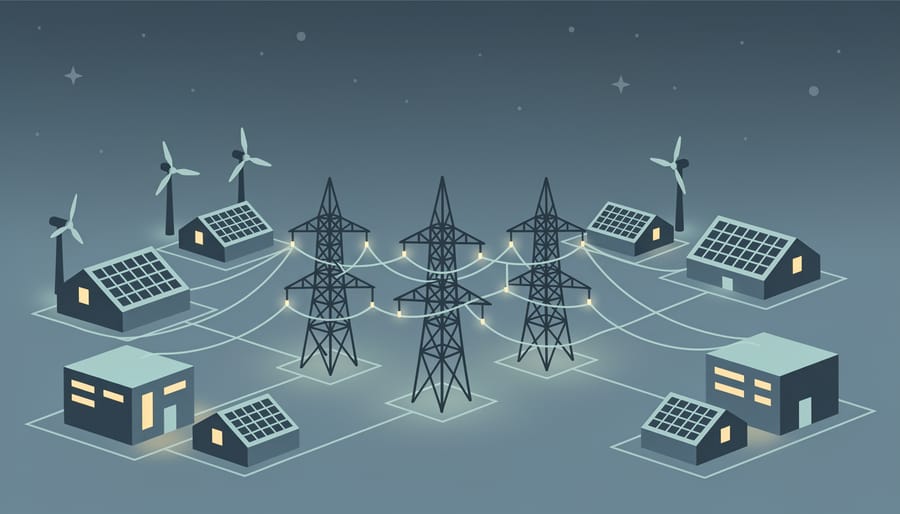
Independent Power Producers strengthen Canada’s energy independence by creating a distributed network of renewable generation that reduces vulnerability to supply shocks and foreign dependence. When businesses generate their own power through solar, wind, or other renewable sources, they collectively reduce the strain on centralized infrastructure and decrease the country’s reliance on imported fossil fuels, particularly during periods of high demand or international market volatility.
The diversification effect is substantial. Traditional energy systems concentrate generation in large facilities, creating single points of failure and limiting energy source variety. IPPs introduce geographic and technological diversity by distributing generation across thousands of sites using different renewable resources. A solar installation in Southern Ontario, a wind farm in Alberta, and a small hydro project in British Columbia each tap into local renewable resources, creating a resilient energy mix that isn’t dependent on any single fuel type or supply chain.
This distributed approach also enhances grid resilience during disruptions. When severe weather, equipment failures, or supply chain issues affect one region, IPPs in other areas continue generating power. The 2021 Texas energy crisis demonstrated how centralized systems can collapse entirely, while distributed renewable generation maintains partial service even during extreme conditions. Canadian businesses operating as IPPs create backup capacity that supports the grid during peak demand periods and emergencies.
The business case for corporate energy independence aligns perfectly with national energy security goals. Companies that generate their own power lock in predictable energy costs for decades, insulating themselves from market fluctuations while reducing operating expenses. These same installations feed excess power back to the grid, strengthening the overall system. In 2026, businesses contributing to Canada’s renewable energy capacity through IPP arrangements aren’t just protecting their bottom line, they’re building the decentralized infrastructure that defines true energy independence in an era of climate uncertainty and geopolitical instability.
How to Apply or Complete the Process
The application process for becoming an Independent Power Producer varies by province, but follows a consistent framework across Canada. Start by contacting your provincial energy regulator, in Ontario, this is the Ontario Energy Board; in Alberta, the Alberta Utilities Commission; in British Columbia, BC Hydro’s interconnection team.
Submit a connection impact assessment application to your local utility. This initial application requires site details, proposed generation capacity, and technology specifications. The utility will assess grid capacity and provide a study timeline, typically 60-90 days for projects under 10 MW.
Once the impact assessment confirms feasibility, submit your generation license application to the provincial regulator. Required documents include environmental assessments, engineering plans, proof of land rights, and financial capacity statements. Processing times range from three to twelve months depending on project complexity and provincial workload.
Simultaneously, negotiate your Power Purchase Agreement with the utility or through provincial procurement programs. Some provinces like Ontario use competitive bidding processes, while others like Alberta allow direct bilateral contracts.
After license approval, complete equipment installation and pass all inspections before commissioning. Schedule final compliance testing with your utility to verify metering, safety systems, and grid synchronization meet technical standards.
Common Questions About Energy Independence and Independent Power Production
Canada’s energy independence and the pathway to becoming an Independent Power Producer raise practical questions for businesses evaluating renewable energy investments. Understanding these fundamentals helps decision-makers assess feasibility and plan realistic timelines for their energy transitions.
Is Canada truly energy independent?
Canada produces more energy than it consumes domestically, making it a net energy exporter, but regional variations mean some provinces rely on imports while others export surplus power. True energy independence varies significantly by province and energy type.
Can small businesses become Independent Power Producers?
Yes, small businesses can become IPPs in most provinces, with capacity thresholds starting as low as 10 kW for micro-generators in some jurisdictions. The viability depends on available space, suitable renewable resources, and provincial regulatory frameworks that support smaller-scale producers.
How long does the IPP approval process typically take?
Timeline varies by province and project scale, but most businesses should expect six to eighteen months from initial application to grid connection approval. Larger projects requiring environmental assessments or community consultations may extend beyond two years.
What are typical startup costs for becoming an IPP?
Initial investment ranges from $15,000 for small solar installations to several million for utility-scale wind or hydro projects. Costs include equipment, installation, grid connection fees, licensing, and legal expenses, with significant variation based on technology choice and provincial requirements.
Provincial differences create distinct opportunities and challenges for prospective IPPs. Ontario’s established feed-in tariff programs historically attracted substantial investment, while Alberta’s deregulated electricity market offers competitive wholesale pricing but less predictable revenue. British Columbia prioritizes hydro development with stringent environmental standards, and Quebec maintains tight utility control over grid access. Saskatchewan and Manitoba offer emerging opportunities for businesses willing to navigate newer regulatory frameworks with less established precedent.
Businesses should also consider seasonal variations in renewable energy production when planning their IPP ventures. Solar generation peaks during summer months but diminishes significantly in winter, particularly in northern provinces. Wind resources vary by region and season, requiring careful site assessment and financial modeling. These production patterns directly affect revenue stability and return on investment timelines, making it essential to match technology choice with local resource availability and grid demand patterns.
Canada’s journey toward energy independence in 2026 remains a work in progress, but the nation’s abundant natural resources and expanding renewable energy infrastructure position it strongly for long-term energy security. While Canada produces more energy than it consumes domestically, true independence extends beyond raw production numbers to include resilience, sustainability, and strategic control over energy supply chains.
Independent Power Producers have emerged as essential partners in this evolution. By decentralizing power generation and accelerating renewable capacity deployment, IPPs reduce reliance on fossil fuel imports and create redundancy that strengthens grid stability. Every megawatt of solar, wind, or hydro power brought online by private entities moves Canada closer to genuine energy sovereignty while supporting climate commitments.
For businesses, the IPP pathway offers more than altruism. Companies that generate their own renewable power gain predictable energy costs, insulation from price volatility, and enhanced corporate reputation among environmentally conscious consumers and investors. Government incentives, streamlined provincial programs, and proven revenue models have made independent power production financially viable across various scales and industries.
The regulatory frameworks now exist. The technology has matured. The economic case has been proven. Businesses evaluating energy strategy in 2026 face a straightforward choice: remain dependent on external suppliers and fossil-fuel pricing, or invest in renewable infrastructure that delivers both operational advantages and environmental leadership. Canada’s energy independence depends largely on how many organizations make that transition.